Many people first meet the Algarve in summer, when restaurant terraces stay busy into the evening and the day seems to revolve around the sea. Permanent life looks different. The beach remains nearby, but school runs, shopping, work, healthcare, and journeys between towns gradually become more important than the holiday view.
The Algarve is also more varied than its familiar coastal image suggests. Eastern towns, central urban areas, the western coast, and inland communities offer different levels of activity, privacy, transport access, and exposure to tourism. The best choice depends on which version of the region feels comfortable after the holiday ends.
What Is Everyday Life in the Algarve Like?
Life in the Algarve naturally extends outdoors. Café terraces, markets, beaches, coastal paths, golf courses, and watersports are woven into the region’s identity. Even simple routines can include a morning coffee outside, a walk near the water, or a stop at a local market.
The pace is generally relaxed, but it is not the same everywhere. Faro and Portimão have active urban centres, while smaller coastal towns and inland communities follow a quieter rhythm. Popular resort areas can feel lively and international, whereas residential streets only a short distance away may remain calm.
Tourism shapes daily life without defining it completely. Summer brings busier roads, crowded beaches, more evening activity, and greater pressure on parking. Residents gradually learn which routes to avoid, when to visit the beach, and where local life continues away from the busiest waterfronts.
Outside the main season, the region becomes quieter. Some visitor-oriented businesses reduce their hours, but established towns continue to revolve around schools, markets, pharmacies, cafés, and neighbourhood services. This contrast between summer energy and a calmer winter is one of the main adjustments for permanent residents.
Choosing Where to Live in the Algarve
The different parts of the Algarve should not be treated as interchangeable. The right location depends on whether daily priorities include a walkable centre, airport access, schools, open-ocean beaches, nightlife, countryside, or privacy.
| Part of the Algarve | Everyday character | Points to consider |
|---|---|---|
| Eastern Algarve | Traditional towns, lagoon landscapes, a quieter pace, and established local communities | Fewer large resorts and less nightlife |
| Central Algarve | Strong access to Faro Airport, schools, healthcare, shops, marinas, golf, and international services | More traffic and tourism in popular locations |
| Western Algarve | Historic towns, cliffs, open Atlantic scenery, surfing, and coastal walking | Greater wind exposure and noticeable seasonal change |
| Inland Algarve | Rural landscapes, larger plots, privacy, and a slower village routine | Fewer nearby services, stronger summer heat, and greater dependence on a car |
The eastern Algarve includes Olhão, Tavira, Castro Marim, and Vila Real de Santo António. The Ria Formosa gives much of this area a distinctive landscape of lagoons, islands, salt marshes, and fishing communities. Town centres can feel compact and locally oriented, while homes beyond them provide more seclusion.
Faro is the regional capital and the main administrative centre of the Algarve. Together with Loulé, Quarteira, Vilamoura, and Albufeira, it forms part of the central Algarve, where residents have broad access to transport, schools, healthcare, shopping, marinas, and international communities. The atmosphere ranges from established urban neighbourhoods to areas built around golf, resorts, and seasonal visitors.
Portimão, Lagos, and the coast towards Sagres form part of the western Algarve. This side has dramatic cliffs, open-ocean beaches, historic centres, and a strong connection with surfing and other outdoor activities. The Atlantic influence is more noticeable here, particularly through wind and sea conditions.
Inland communities around Silves, São Brás de Alportel, and Monchique offer hills, village life, rural properties, and greater privacy. The distances between home, shops, schools, and healthcare can be longer, making the exact location especially important.
Selected town centres allow residents to complete many journeys on foot. The regional railway connects several places along the Algarve, while buses fill some of the remaining gaps. A car becomes considerably more useful for villas, rural houses, golf developments, and properties outside established centres.
Climate and Seasons in the Algarve
The Algarve has a Mediterranean climate influenced by the Atlantic. Summers are generally hot, dry, and sunny. Winters are mild, with more rain and humidity, while spring and autumn often provide comfortable conditions for walking, cycling, gardening, and other outdoor activities.
Weather varies across the region. The western coastline is more exposed to Atlantic wind and changing sea conditions. Eastern areas are generally more sheltered, while inland locations can become considerably hotter during summer.
The ocean remains cooler than some newcomers expect, even when the air is warm. Conditions can also change between beaches: a sheltered beach on the southern coast may feel calm while an exposed western beach experiences stronger wind and waves.
Summer changes the rhythm of coastal areas as well as the temperature. Roads and beaches become busier, restaurant terraces fill, and popular centres stay active later into the evening. Winter brings a slower pace and reveals which neighbourhoods have a stable year-round community.
The climate supports outdoor living for much of the year, but it should not be judged only by the number of sunny days. Wind exposure, summer heat, winter humidity, and the orientation of a home all influence everyday comfort.
Renting and Buying Property in the Algarve
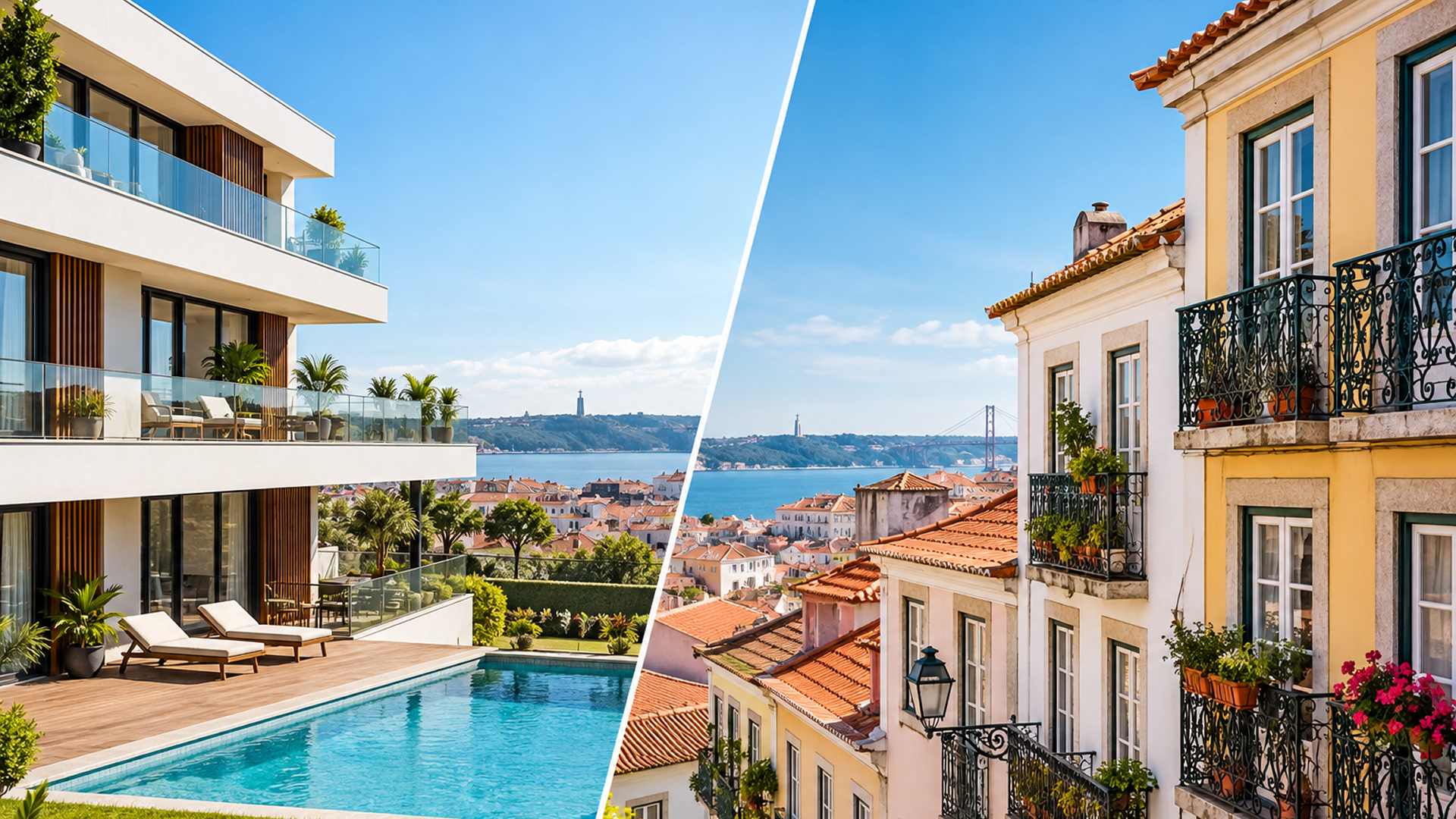
Housing in the Algarve ranges from town-centre apartments and traditional townhouses to coastal villas, resort properties, and rural homes surrounded by land. Each type supports a different routine.
An apartment in an established centre may place shops, cafés, markets, and transport within walking distance. A villa can provide privacy and outdoor space but often requires regular driving and more maintenance. Resort properties may include shared gardens, pools, or managed facilities, although residents should understand how the development operates throughout the year.
A home designed mainly for summer use may feel very different in January. Limited heating, poor ventilation, shaded rooms, and moisture can make an interior cold or damp. In summer, large west-facing windows, exposed terraces, and insufficient cooling can create the opposite problem.
Traditional and rural properties require careful examination. A renovated kitchen or freshly painted wall does not confirm the condition of the roof, drainage, electrical system, windows, insulation, or water supply. Boundaries, access roads, outbuildings, extensions, and other alterations should correspond with the property documents.
A viewing should cover the features that affect permanent use:
- Look for damp, condensation, staining, and recently painted patches.
- Establish how the property is heated, cooled, and ventilated.
- Consider sunlight, shade, and wind exposure.
- Inspect windows, shutters, terraces, roofs, drainage, gardens, and pool areas.
- Confirm parking, vehicle access, mobile reception, and fixed internet.
- Clarify which areas, appliances, furniture, and storage spaces are included.
- Review the condition and management of shared facilities.
Long-term renters should confirm that the property is genuinely available for the required period. The written agreement should clearly state its duration, renewal conditions, deposit, inventory, repair responsibilities, and termination procedure.
Buyers should evaluate the entire property rather than focusing on the pool, terrace, or sea view. Legal documentation, registered areas, alterations, access, shared responsibilities, and the condition of the wider building or development all affect permanent use.
Foreign residents comparing homes across the region can explore the wider Portugal real estate market, including apartments, villas, townhouses, and rural properties in the Algarve.
Healthcare, Schools, and Everyday Services
The largest towns provide the broadest concentration of healthcare, schools, shops, and administrative services. Smaller coastal and inland communities may cover everyday needs locally, while specialised appointments or particular schools require travel elsewhere in the region.
Faro and Portimão are important healthcare centres. Other towns have pharmacies, health facilities, dental practices, and private clinics, but the most suitable service may not be located close to the property.
Families need to consider the complete school journey, including morning traffic, drop-off arrangements, and after-school activities. Public, private, and international options are distributed unevenly, so a home with an attractive setting may still create an impractical daily route.
The surrounding streets often reveal more than the property listing. A year-round supermarket, pharmacy, café, market, repair business, and convenient road connection can make daily life easier than a location dominated by seasonal accommodation and visitor-oriented businesses.
Remote workers should verify internet availability inside the property. Thick walls, surrounding terrain, and distance from established infrastructure can affect both fixed connections and mobile reception.
Food, Leisure, and Social Life
Food in the Algarve reflects both the coast and the interior. Fish, shellfish, olive oil, garlic, herbs, citrus fruit, figs, and almonds appear throughout regional cooking.
Cataplana is one of the Algarve’s best-known preparations. Named after the hinged metal vessel in which it is cooked, it can combine seafood, fish, meat, vegetables, and aromatic broth. Grilled sardines, octopus, clams, fish stews, and frango piri-piri are also closely associated with the region.
Markets bring these ingredients into everyday life. Fish counters, seasonal fruit, vegetables, bread, cheese, and prepared foods offer a different experience from the restaurant terraces along the busiest promenades. Residents often develop their own routine of favourite stalls, neighbourhood cafés, and small restaurants away from the main visitor routes.
Outdoor activities continue beyond the beach season. Coastal walking, golf, cycling, sailing, surfing, birdwatching around wetland areas, and hiking in the hills can become regular parts of the week rather than occasional holiday activities.
The international population makes it relatively easy to meet other newcomers, especially in coastal towns and areas with international schools, golf, or remote-working communities. English is widely understood in many tourism-related and international environments.
European Portuguese becomes more important when dealing with neighbours, contractors, property matters, local services, or administrative correspondence. Regular contact at markets, cafés, sports clubs, cultural events, and neighbourhood businesses helps residents move beyond the international layer of the region.
A resort area may offer an active social scene but a changing population. Established towns provide more continuity, while rural life requires greater effort to maintain regular contact. The most comfortable environment depends on whether a person prefers international activity, a quieter local community, or a mixture of both.
Is the Algarve Right for You?
The Algarve offers several ways to live: an apartment in an active town, a coastal home near outdoor activities, a villa within a managed development, or a rural property surrounded by hills. The same qualities will appeal to some residents and frustrate others.
| The Algarve may suit you if… | It may be less suitable if… |
|---|---|
| Outdoor life is important to your routine | You prefer a dense urban environment |
| You are comfortable with a slower pace | You need constant nightlife and cultural activity |
| You accept seasonal changes in traffic and activity | You expect coastal areas to remain quiet in summer |
| You can choose a home close to essential services | You want an isolated property without relying on a car |
| You value beaches, nature, and smaller communities | You depend on a broad local professional market |
| You are prepared to assess a home in different seasons | You are choosing mainly from holiday impressions |
A busy resort is not representative of the whole Algarve, just as an isolated inland property does not reflect life in Faro, Tavira, Lagos, or another established town. The decision should be based on a specific location and the routine it supports.
What to Check Before Choosing a Place to Live
A preliminary stay should reproduce normal life rather than a holiday itinerary.
- Visit outside the main holiday period. This shows which services and activities continue throughout the year.
- Stay in the intended location. Another town will not reveal the local traffic, transport, noise, or evening atmosphere.
- Test essential journeys. Travel to the supermarket, school, pharmacy, healthcare facilities, and other regular destinations.
- Experience the property in realistic weather. Heat, wind, rain, shade, and humidity expose different strengths and weaknesses.
- Return after dark. Road access, parking, lighting, and neighbourhood activity may feel different in the evening.
- Test the internet inside the home. Check both fixed service and mobile reception in the rooms where they will be used.
- Compare different parts of the Algarve. Another town or inland location may provide a more suitable balance of privacy, services, transport, and coastal access.
Conclusion
Living in the Algarve can mean walking to a morning market, driving from a quiet hillside home, spending free time near the Ria Formosa, or organising life around the open Atlantic coast. These experiences belong to the same region but create very different routines.
The right choice is not simply the most attractive place seen during a holiday. It is the part of the Algarve where the climate, home, services, transport, and community continue to feel comfortable throughout the year.
This article provides general information and does not constitute legal, immigration, financial, medical, or real estate advice. Individual requirements depend on personal circumstances and the location of the property.