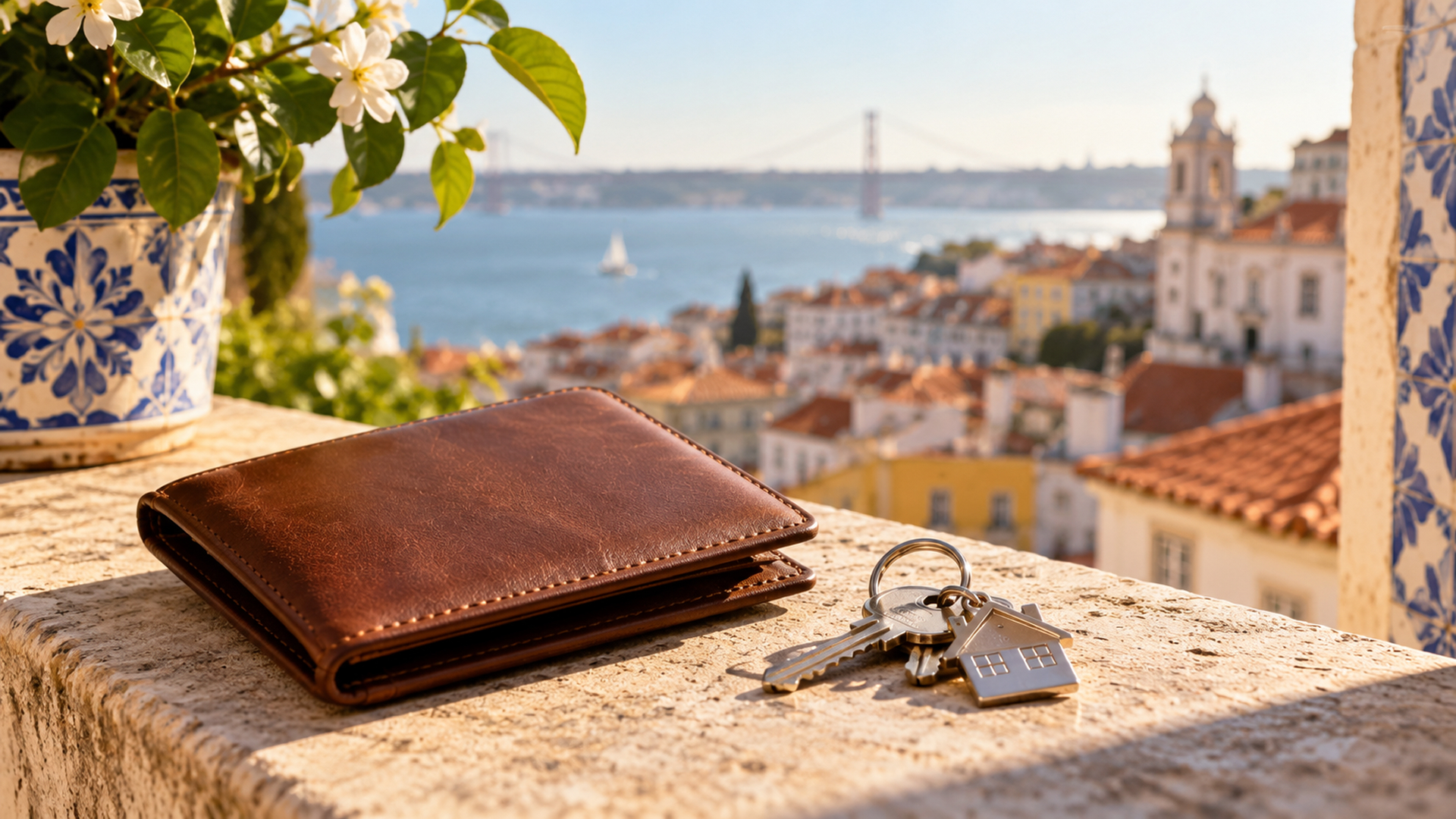
A laptop and a stable internet connection have quietly rewritten the rules of where a career can be based. For thousands of professionals who bill clients or draw a salary from abroad, Portugal has turned into one of the more attractive answers to that question. The D8 route was built with exactly this group in mind — people whose desks could physically sit anywhere, but who want their legal footing to sit firmly inside an EU country. It isn't a tourist permit stretched past its natural limits, and it isn't a single fixed product either — it's a dedicated visa category built around remote income, with more than one path inside it depending on how long someone plans to stay.
What Is the Portugal D8 Visa and Who Is It For?
The route commonly known as D8 is intended for citizens of countries outside the EU, EEA, and Switzerland who carry out professional activity remotely for an employer or client based outside Portugal. Before it existed, remote professionals wanting to base themselves in Portugal had few clean options — either uncertain tourist-visa stays or routes never really designed for their situation. The D8 closed that gap.
Its defining feature is straightforward: the professional activity supporting the D8 application is connected to an employer or client outside Portugal. That single detail separates it from work permits linked to a local employer, where a Portuguese company sponsors the applicant directly. With D8, the professional simply keeps doing what they already do — reporting to a foreign employer, invoicing overseas clients, or steering a business registered elsewhere — while their day-to-day life happens in Portugal.
People who typically find this route relevant include:
- Employees on the payroll of a company with no legal presence in Portugal;
- Independent contractors and freelancers whose client base sits abroad;
- Business owners who can document active remote professional activity through a foreign company;
- Specialists in fields — consulting, design, software, media, and similar — where the work itself has no geographic anchor.
What D8 was never meant to cover is local employment inside Portugal or a short tourist stay stretched past its limits. The category is built entirely around an existing, verifiable professional connection abroad — simply receiving money into a foreign account, without an underlying employment or client relationship behind it, wouldn't meet the bar on its own.
What Types of D8 Visa Are Available?
Within the D8 framework, applicants generally choose between two paths, and the right one depends less on eligibility and more on intent — specifically, how long someone plans to stay and what comes after.
A temporary stay visa. Built for people who want to work remotely from Portugal for a defined period of less than one year, without necessarily committing to a permanent move. It does not itself grant a residence permit or automatically move the holder onto the residence route; it is intended for a defined period of stay. Nomads treating Portugal as one chapter among several — rather than a final destination — tend to lean toward this version.
A residence visa. This is what most people actually picture when the term "D8 visa" comes up in relocation conversations. It's designed as the doorway into Portugal's residence system: the option for people who mean to build a longer-term life in the country rather than pass through it.
The underlying financial and professional criteria don't diverge much between the two — what changes is the intended duration and the legal trajectory each one opens up. Because Portuguese immigration policy periodically adjusts category names, renewal mechanics, and fine print, it makes sense to verify the current framework directly rather than lean on descriptions that may already be outdated.
D8 Visa Requirements and Documents
While the exact checklist can vary slightly depending on the consulate or the applicant's personal situation, the D8 visa is generally built around several core areas that every applicant needs to address.
Evidence of remote professional activity and income. The applicant has to show that the underlying work is genuinely remote — carried out for an employer or client based outside Portugal — and supported by evidence showing the required income over the previous three months. This usually takes the form of a work contract, service agreements, invoices, or other records showing services provided to foreign clients or companies. The required average monthly income is tied to four Portuguese minimum monthly wages, so the euro amount changes when the minimum wage changes. The professional relationship should already exist when the application is made rather than depend on finding qualifying work after arrival.
Proof of tax residence. Applicants also need evidence of their tax residence at the time of application, alongside the documents confirming remote activity and income.
Somewhere to live in Portugal. This might be a signed rental contract, a preliminary property purchase agreement, or another document establishing an address.
Standard personal paperwork. A valid passport, health insurance covering the applicant in Portugal (relevant until access to the public system becomes possible), a criminal background certificate from the country of current residence, plus the completed application forms and photos consulates ask for.
Minimum income figures, the precise document list, and formatting rules such as translations or notarizations are set by the authorities and revised from time to time, so any numbers found online should be treated as a rough starting point rather than a fixed target — worth double-checking with the relevant consulate before submission.
How to Apply for the Portugal D8 Visa?
For applicants choosing the residence route, the process has two main stages: one abroad, before departure, and one on Portuguese soil after arrival.
Stage one happens at the Portuguese consulate covering the applicant's place of residence. This is where income, work history, housing, and personal documents get filed and reviewed, and some consulates add an interview to the mix. Approval at this stage results in a residence visa that allows the applicant to enter Portugal and continue to the residence-permit process after arrival.
How long either stage takes can swing widely depending on the consulate, seasonal demand, and the specifics of an individual case — building slack into any relocation timeline is far more realistic than expecting a fixed number of weeks. It also helps to have documents ready well ahead of time, keep both scanned and physical copies on hand, and confirm that any translated or certified paperwork matches the exact format the handling consulate expects.
What Happens After You Arrive in Portugal?
Arrival isn't quite the finish line — one milestone remains before the residence process is actually complete: applying through AIMA for the residence permit. For this step, AIMA generally expects a valid passport, the residence visa issued at the consulate, documentation confirming the underlying remote professional connection, and details of the address in Portugal. Once approved, the permit is typically issued for an initial two-year period, with subsequent renewals granted in three-year increments after that.
Holding the permit comes with ongoing conditions rather than a one-off checkbox. Under the general rules that apply to temporary residence permits, an authorization can be cancelled if the holder is absent from the country — without a valid reason — for six consecutive months or eight months spread out across the permit's period of validity. Staying inside those limits, alongside continuing to meet the underlying income and professional-activity conditions, is what keeps the path moving forward through each renewal and, eventually, toward long-term residence.
D8 Visa and Taxes
Relocating under a D8 visa and becoming a Portuguese taxpayer are two separate questions, and conflating them is one of the more common mistakes people make. Holding a residence permit doesn't automatically flip someone into tax-resident status, and tax residency itself isn't determined by visa type — it typically hinges on concrete tests such as spending more than 183 days in the country within a relevant period, or keeping a home in Portugal under circumstances that indicate an intention to maintain and occupy it as a permanent residence.
Once that happens, Portuguese tax residents generally become subject to Portuguese taxation on income from Portugal and abroad, although the treatment depends on the type of income and the applicable rules, unless a specific incentive program applies. Portugal has, at various points, rolled out special regimes aimed at drawing in new residents, including highly qualified professionals working in particular sectors. Qualifying for these programs tends to be narrower than popular perception suggests, isn't automatic just because someone works remotely or freelances, and the underlying rules have shifted more than once. Because of that, D8 status by itself shouldn't be treated as a shortcut to any particular tax outcome.
Tax treaties between Portugal and an applicant's home country can further complicate the picture if obligations remain on both sides, and untangling two overlapping tax systems is rarely something to figure out casually. Given all of this, tax planning deserves its own dedicated conversation with a qualified advisor familiar with both Portuguese rules and home-country obligations — ideally before assuming anything about how income will actually be taxed.
Where Can Digital Nomads Live in Portugal?
Remote work's biggest perk is choice, and Portugal genuinely delivers on that front, offering far more variety than the handful of postcard destinations that usually dominate search results.
Lisbon still pulls the largest share of remote professionals, thanks to its density of coworking spaces, international crowd, and the easiest flight connections into and out of the country — an international airport with frequent long-haul routes matters more than people expect once family and clients start visiting regularly.
Porto has carved out a strong niche as the alternative: similarly international and well connected through its own airport, with a compact center that keeps most day-to-day life within walking or tram distance.
The Algarve, stretched along the southern coast, draws people prioritizing sunshine, sea views, and a slower rhythm, though its infrastructure and pace shift noticeably between the busy summer season and the quieter months that follow.
Smaller inland towns and cities — around Coimbra and similar regions — offer a quieter, more local rhythm of life for anyone who doesn't need to be minutes from an international hub, though direct flight options and international-school choices tend to be more limited than in the two largest cities.
Madeira and the Azores have specifically courted this crowd, setting up dedicated coworking hubs and leaning into an outdoor, nature-first lifestyle — though being islands adds its own logistics around flight frequency and travel time to mainland Europe.
Which spot actually fits depends on personal priorities — flight access, climate, community, or just the tempo of daily life someone's after. For a closer look at specific neighborhoods, property types, and current listings across these regions, Portugal real estate is a useful next stop before settling on where to base yourself.
Conclusion
D8 offers remote professionals, freelancers, and business owners a genuine legal route to live and work remotely from Portugal, with a residence path for those planning a longer move, without asking them to give up the foreign income that supports them. The concept behind it is simple enough — verifiable remote earnings, an already-running professional activity, and a real intention to live in the country — but the mechanics of eligibility, paperwork, and renewal shift as Portuguese immigration policy evolves. Anyone weighing this path should treat overview material like this as a starting point rather than the final word, and confirm current rules and timelines directly with Portuguese authorities or a qualified professional before locking in relocation plans.
FAQ
Can family members join a D8 residence permit holder?
Family reunification may be available to a D8 residence permit holder, but eligibility and timing depend on the family member and the residence period already completed in Portugal. Different rules apply to spouses, children, and other dependent relatives, so the current AIMA requirements should be checked before applying.
Do I need permanent housing arranged before I even apply?
Not necessarily — a signed long-term lease isn't always required at the outset. The acceptable form of accommodation evidence depends on the consulate handling the application, so its current checklist should be checked before submission.
Can a D8 visa later convert into a different residence status?
Residence status can evolve as circumstances change, but moving between categories always depends on meeting that category's own legal conditions at the time — it's never an automatic switch.
Do I have to stay in Portugal all year to keep my D8 status?
No, but extended absences do have real limits, as described above. If a longer absence is genuinely unavoidable — for health, family, or work reasons — it's possible to submit a justification to AIMA in advance rather than simply exceeding the limits and hoping it goes unnoticed.
What happens if my remote income drops below the required level after I already have the permit?
A significant change in income can become relevant at renewal, because temporary residence permits require the holder to continue demonstrating sufficient means of subsistence. The renewal rules are not identical to the original visa application, so the requirements in force at the time of renewal should be checked directly.