It is easy to form an impression of Braga too quickly. Its historic image is so strong that after a short visit, the city may seem like a quiet and traditional place in northern Portugal. Stay longer, however, and that first impression begins to change.
For someone considering a move, that difference matters. Braga reveals itself gradually through ordinary days rather than landmarks, and that is when the city starts to feel much more interesting than its familiar image suggests.
Where to Live in Braga
Choosing an area in Braga changes the experience of the city quite noticeably. Living in the oldest central streets makes cafés, shops and cultural venues easy to reach on foot, while moving east brings the university into everyday life. Areas toward the edge of the urban core offer more detached housing and a less central atmosphere.
Five areas illustrate these differences particularly well. Gualtar is closely associated with the University of Minho’s main Braga campus, while Nogueiró and Tenões extend toward Bom Jesus and combine urban residential streets with lower-density sections. Braga railway station is on the western side of the central area, in Maximinos.
| Area | Character | What Makes It Different |
|---|---|---|
| Historic Centre | Central and walkable | Older architecture, cafés, restaurants and shops close at hand, with less space for parking and a denser urban feel |
| São Victor | Large residential district | Convenient position between the centre, Hospital de Braga and the university side of the city, with a broad mix of apartment housing |
| Gualtar | University area | Direct access to the University of Minho campus, a stronger student presence and a good range of services around the eastern side of Braga |
| Nogueiró and Tenões | Lower-density residential area | More detached homes, quieter streets and a gradual transition from urban neighbourhoods to greener surroundings near Bom Jesus |
| Maximinos | Western central district | Easy access to Braga railway station and the city centre, useful for residents who travel regularly by train |
What Is It Like to Live in Braga?
Braga does not operate like a city built mainly for visitors. Central streets remain part of ordinary routines: people cross Praça da República on their way to work, shop nearby and use cafés, gardens and public spaces throughout the week.
The Mercado Municipal adds another layer to that daily rhythm. It remains a working market for food and local products while also hosting social and cultural initiatives, so it functions as more than a sightseeing stop.
The city is busy without feeling enormous. Central Braga is compact enough for spontaneous errands or an evening out without complicated planning, yet the municipality extends much farther. A move of only a few kilometres can take you from narrow old streets to apartment districts, suburban housing or greener residential areas.
Religion is highly visible in Braga’s architecture and calendar, but it does not define every part of contemporary life. Students, cultural programming and commercial activity give the city a broader personality than its churches alone suggest.
Braga as a University and Working City
The University of Minho has a particularly strong presence in Braga. Its Gualtar campus is the university’s largest and contains schools and institutes covering fields including science, law, economics and management, medicine, psychology, education and engineering.
Its presence affects the surrounding city. Students, researchers and university staff support cafés, restaurants, rentals, transport and other services, particularly on the eastern side of Braga. The academic calendar also changes the level of activity during the year.
Braga’s employment base, however, is broader than higher education. Technology-related businesses, manufacturing, services, tourism and hospitality all form part of the local economy. For an international resident looking for work locally, the type of job matters: English may be enough in some international or technical environments, but Portuguese remains important for a much wider range of positions and professional relationships.
Remote work removes some dependence on the local job market. Fibre connections, coworking options and ordinary urban services are available across much of the city, although internet quality should still be checked at the specific property.
Local Life and Community in Braga
Settling into Braga is less about finding a separate expat district and more about becoming familiar with the places already used by local residents. Neighbourhood cafés, bakeries, markets, sports facilities and community events are often the easiest points of contact.
Portuguese makes a noticeable difference. It is possible to manage many situations in English, particularly among younger residents and in international environments, but basic Portuguese becomes useful in shops, municipal services, schools, healthcare and conversations with neighbours.
Braga also has a strong calendar of local celebrations. Religious traditions remain visible, while concerts, exhibitions, festivals and contemporary cultural programmes add other layers of activity. Longstanding customs and newer urban culture coexist rather than occupying completely separate worlds.
For newcomers, social life does not have to depend entirely on an international community. Joining a gym, taking a language course, returning to the same café or shopping regularly at the market can create a more natural route into local routines than attending expat-only events.
Getting Around the City
Braga is relatively easy to manage without a car if you live close to the centre and do not need to cross the municipality several times a day. Many shops, restaurants and services are within walking distance of one another.
The municipal bus network is operated by Transportes Urbanos de Braga (TUB) and extends well beyond the central area, including routes serving the university, hospital, Bom Jesus and residential districts.
Rail adds another useful option. Braga is connected to the national network and is served by urban trains from the Porto system as well as longer-distance CP services. The municipality is also linked by major roads including the A3, A11 and A7. Francisco Sá Carneiro Airport near Porto is approximately 50 kilometres away.
A car becomes more useful for households living farther out, parents managing several school or activity trips, or anyone making frequent journeys outside Braga. For short trips within the denser central streets, walking or public transport can be simpler.
Homes and Residential Life
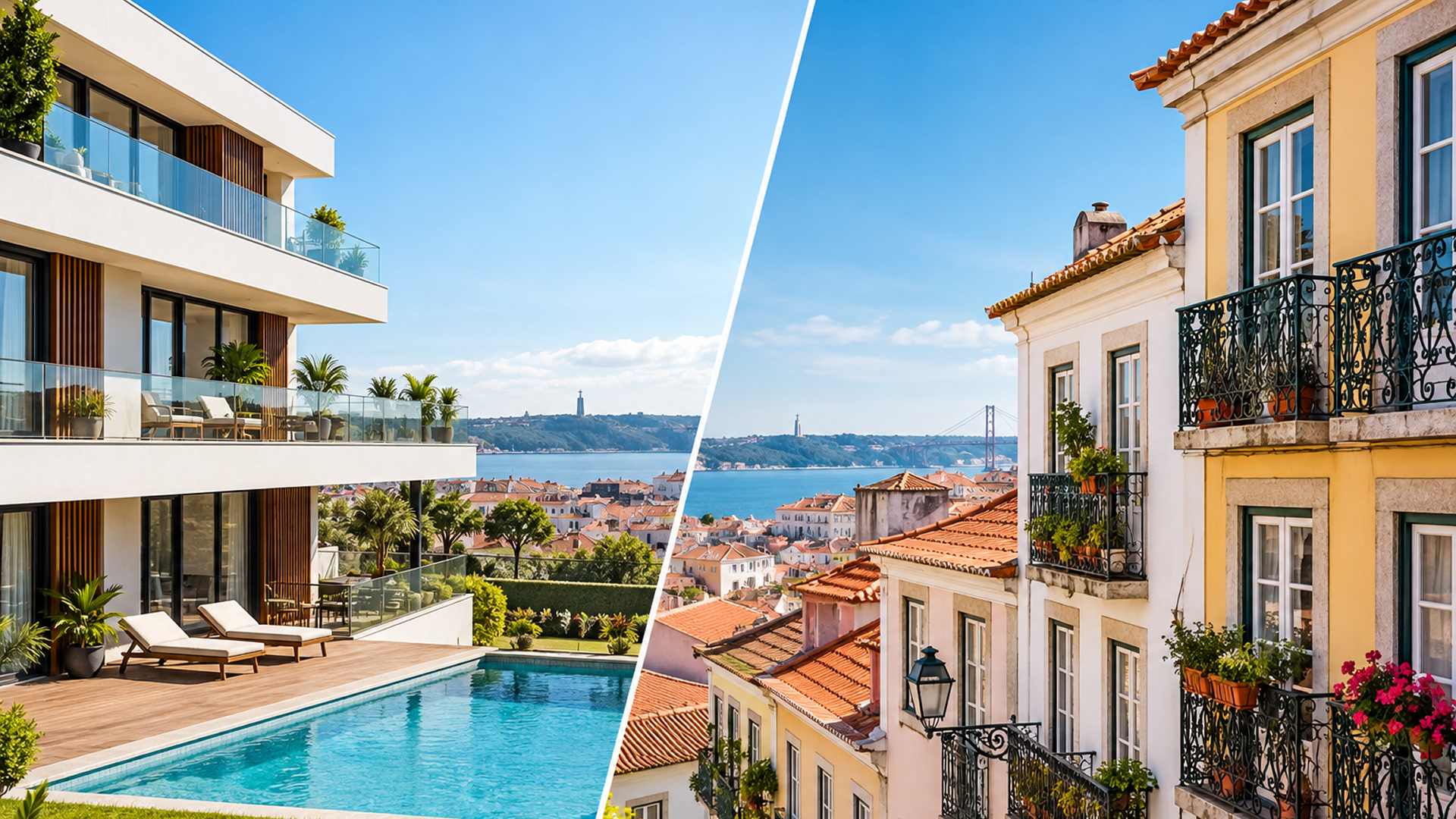
Braga’s housing changes significantly from one part of the city to another. Older central areas contain renovated apartments, traditional houses and multi-storey buildings, while the surrounding residential districts have a much larger concentration of apartment blocks. Toward the outer neighbourhoods, detached and semi-detached houses become easier to find.
Newer construction has also expanded Braga’s housing stock outside the oldest part of the city. This gives buyers a choice between architectural character and more contemporary layouts, garages, lifts, balconies and modern energy systems.
Anyone looking through Portugal real estate in Braga should pay attention to the building itself rather than assuming that two apartments of a similar size will offer the same level of comfort.
Several details are especially worth checking:
- Heating and insulation — winter in northern Portugal makes these more important than many newcomers expect.
- Ventilation — older buildings can be more susceptible to condensation or damp if air circulation is poor.
- Lift access — some older apartment buildings have several floors but no elevator.
- Street noise — cafés, traffic and evening activity can affect apartments differently depending on their exact position.
- Sun exposure — orientation can noticeably affect indoor comfort and how often balconies or terraces are used.
The type of neighbourhood also changes what surrounds the property. A central apartment may put cafés and shops downstairs, while a house in Nogueiró or Tenões may trade that immediacy for more outdoor space and a quieter street.
Food, Culture and Free Time
Braga has enough cultural and recreational variety that weekends do not need to follow a fixed pattern. Central areas provide theatres, museums, churches, gardens and public squares, while the surrounding hills add walking areas and viewpoints.
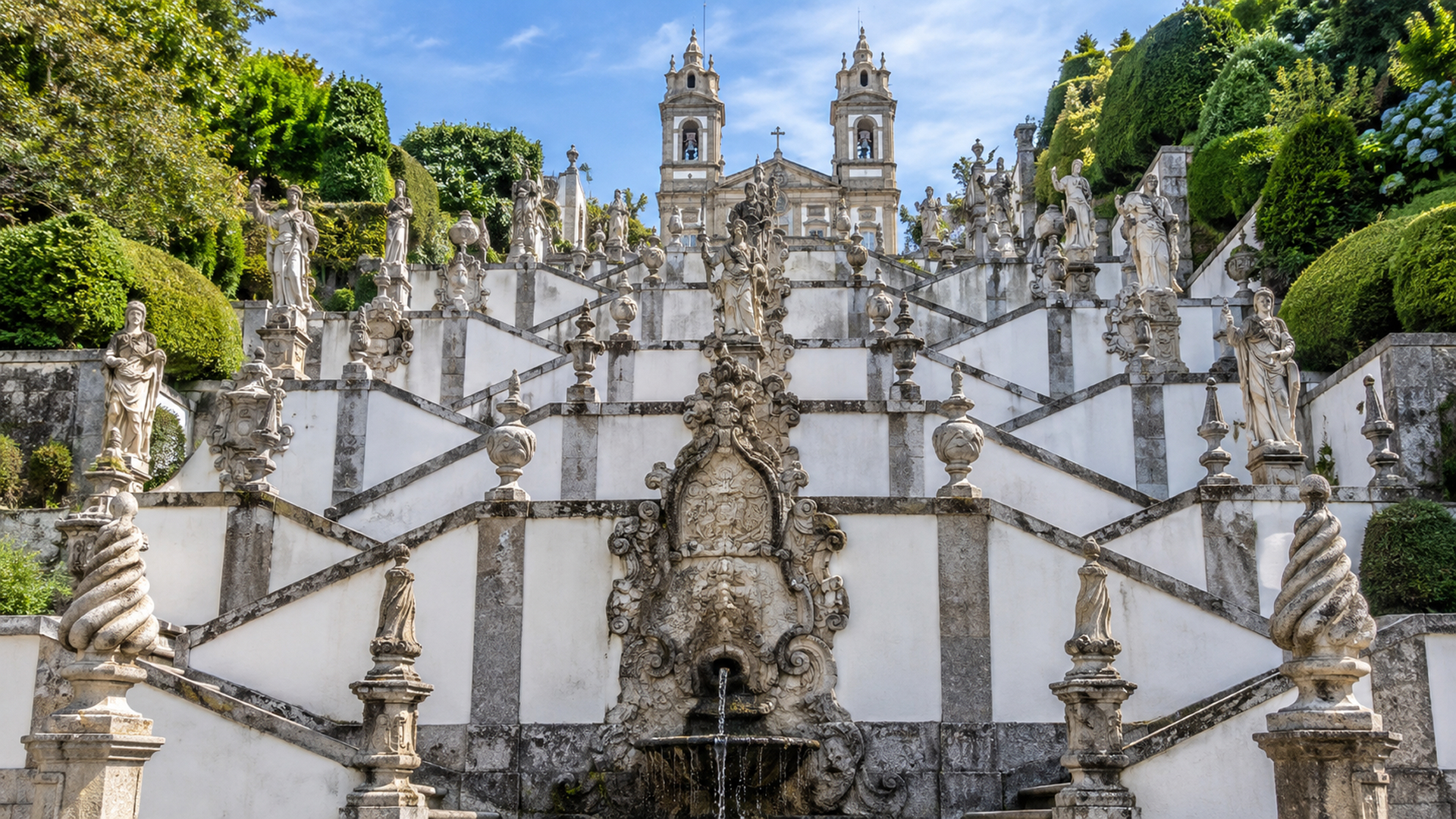
Bom Jesus do Monte is the best-known example. The sanctuary and its monumental stairway have been a UNESCO World Heritage Site since 2019, but the wooded area around it also makes it part of local leisure rather than solely a monument for visitors.
Other ways to spend free time include:
- walking through the old streets and Jardim de Santa Bárbara;
- visiting the Municipal Market and weekly markets;
- attending performances, exhibitions and local festivals;
- spending time in urban parks and outdoor spaces;
- exploring Bom Jesus and the hills east of the city;
- taking short trips to other parts of Minho.
Food gives Braga an identity distinct from Portugal’s coastal cities. Bacalhau à Braga, rojões à Minhota and Pudim Abade de Priscos are among the better-known regional specialities. Vinho Verde is closely associated with Minho and remains part of the local food culture rather than simply a product marketed to tourists.
Restaurants range from traditional tascas and long-established local dining rooms to newer cafés and contemporary restaurants. The city’s younger population also broadens casual dining and evening options, although nightlife remains more restrained than in Portugal’s two largest cities.
Weather Through the Year
Braga’s green surroundings come with a wetter climate than many parts of southern Portugal. Rain is particularly significant from autumn through winter, while July and August are much drier.
Official IPMA climate data for Braga/Merelim show average daily maximum temperatures of 28.2°C in July and 28.7°C in August, compared with 14.1°C in January. Average annual precipitation is around 1,387 mm, with October, November, December and January among the wettest months.
Summer is therefore warm enough for outdoor living but does not define the whole year. Autumn can remain mild while becoming progressively wetter, and winter introduces colder mornings, persistent rain and occasional frost.
This climate is one reason the condition of a home matters. A sunny apartment with good insulation and ventilation can feel very different in January from an older shaded property that looked equally comfortable during a summer viewing.
Healthcare and Education
As a major urban centre in northern Portugal, Braga has a substantial healthcare network. Hospital de Braga provides emergency care and numerous medical specialties, while primary care is delivered through local health units across the municipality. Private clinics and medical providers add further options.
Families have a broad education network to consider. The municipality has public schools covering preschool, primary and secondary education, alongside a sizeable private and cooperative sector. Higher education includes the University of Minho and other institutions.
International education is available but is much less extensive than in the Lisbon metropolitan area. CLIB — Colégio Luso-Internacional de Braga, located in Gualtar, teaches students from ages 3 to 18 and uses English as the main language of instruction across much of its programme.
For families moving with children, school choice can influence the neighbourhood more than any general ranking of Braga’s residential areas. Daily school journeys, after-school activities and access to public transport quickly become more important than being a few minutes closer to the centre.
Conclusion
Braga is not a city that needs constant novelty to remain interesting. Much of its appeal comes from how easily different parts of life can coexist: old streets remain useful rather than decorative, local traditions continue without freezing the city in the past, and newer influences have become part of its normal rhythm.
For someone planning to stay, that balance may matter more than any individual landmark or neighbourhood. Braga works best when it is approached not as a smaller alternative to Porto, but as a city with its own pace and identity.