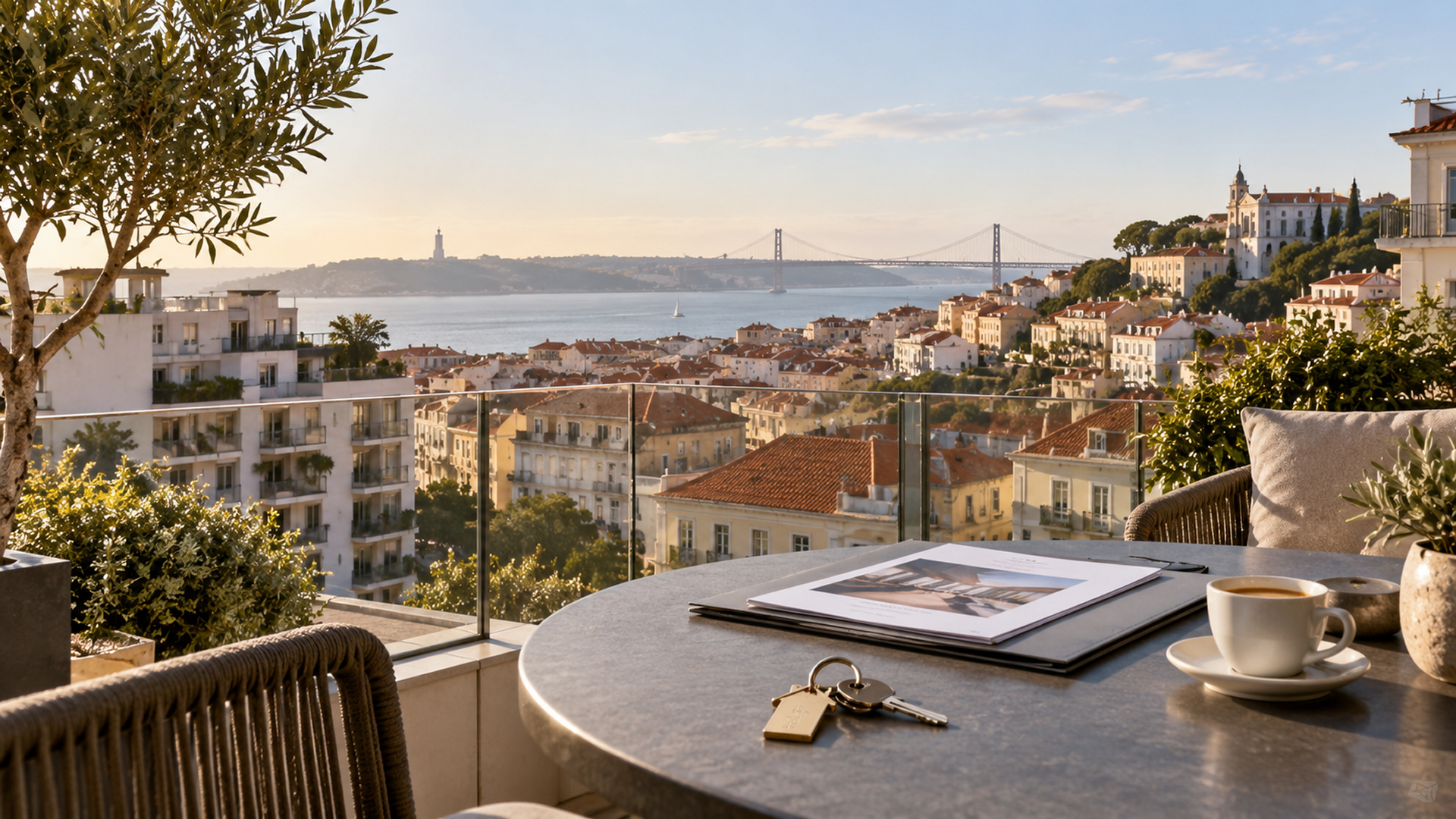
Comporta is easy to associate with summer: long Atlantic beaches, pale sand, rice fields and houses hidden among pines. Permanent life reveals a quieter and more practical side of the area.
The village is small, the surrounding landscape remains remarkably open, and distances play a bigger role than they do in a city. Some errands need planning, many regular journeys involve a car, and the atmosphere changes noticeably once the busiest summer weeks are over.
That combination gives Comporta its character. It offers an unusually close relationship with the coast and countryside while keeping everyday life on a much smaller scale than Portugal’s major urban destinations.
What Is It Like to Live in Comporta?
Comporta is compact and low-density. Traditional houses, newer villas, cafés, restaurants and local businesses sit within a landscape still dominated by agricultural land, pine trees and sandy stretches rather than continuous development.
Daily routines tend to form around a relatively small number of familiar places. There may be a regular café, bakery or restaurant rather than a different choice on every street. Larger errands generally require travelling farther.
The village itself can feel calm even during an ordinary working week. Outside its compact centre, houses are more dispersed and the transition from residential areas to open countryside happens quickly.
This creates a lifestyle with fewer spontaneous urban options but more room outdoors. The difference is most noticeable to people arriving from a dense city, where shops, public transport and services are expected within a short walk.
Beaches and Nature in Comporta
Praia da Comporta is one of the defining features of the area. The broad Atlantic beach is backed by dunes and natural vegetation, with no dense strip of high-rise development separating the village from the coast.
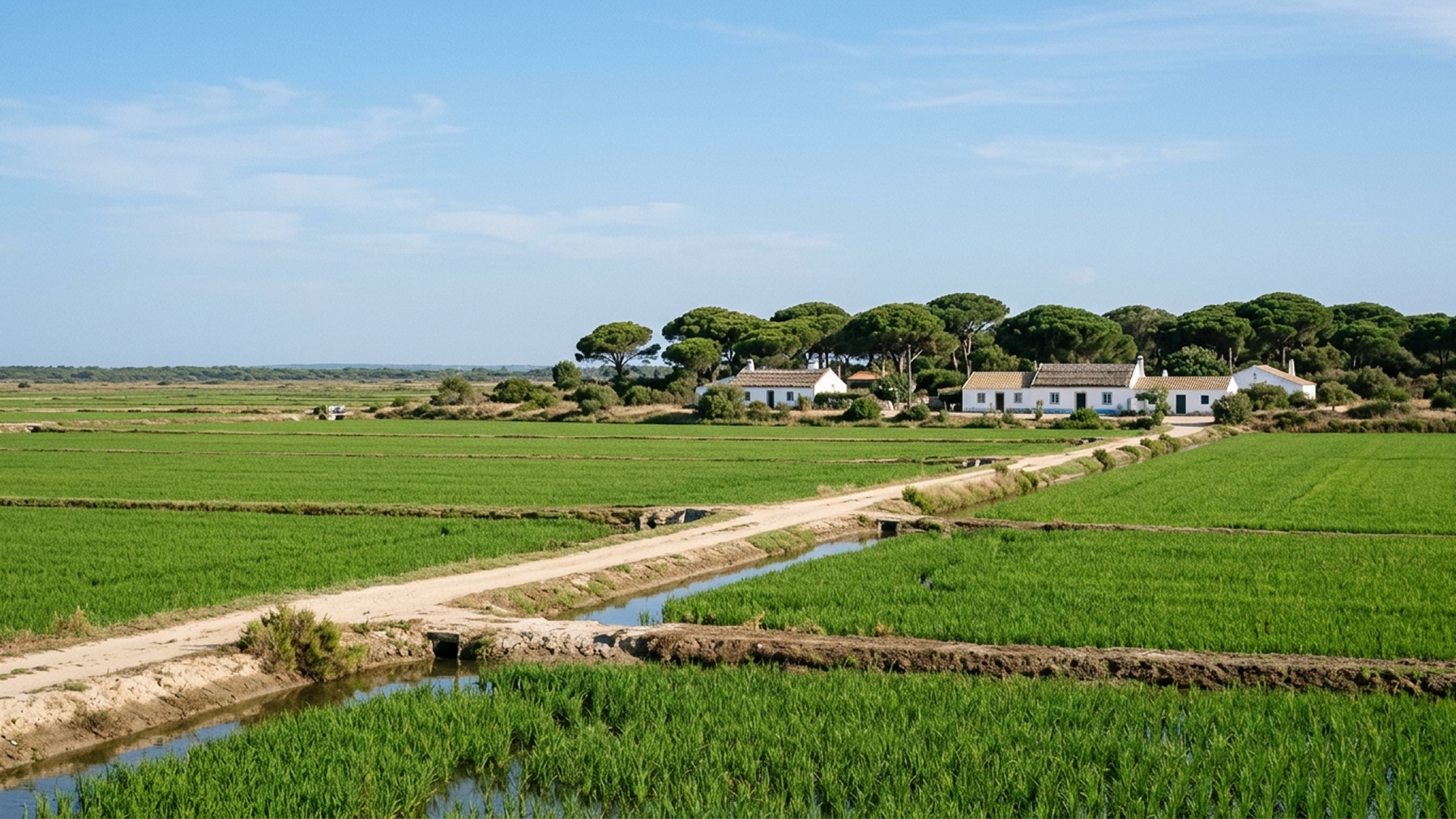
Away from the water, rice fields create an equally distinctive landscape. Their colour and appearance change through the agricultural cycle, so the surrounding countryside does not look the same throughout the year.
The natural environment includes:
- long Atlantic beaches;
- rice fields and working agricultural land;
- pine forests and coastal vegetation;
- dunes and wetlands;
- birdlife associated with the Sado Estuary.
The Sado environment adds another dimension to the landscape. Wetlands and agricultural areas attract numerous bird species, while the mixture of water, fields and forest gives the area a much greater variety of scenery than the beach alone might suggest.
New development has changed parts of Comporta, but open land still plays a major visual role. Roads often pass between fields or woodland rather than continuous rows of buildings, and many homes retain direct contact with the surrounding landscape.
Climate in Comporta
Comporta has a Mediterranean climate shaped by its proximity to the Atlantic. Summers are hot, dry and predominantly sunny. Winters are mild, with more rain and occasional periods of wind and damp weather.
Sea breezes can moderate summer heat near the coast, particularly later in the day. The Atlantic itself remains relatively cool, so high air temperatures do not necessarily mean warm sea conditions.
Spring often brings comfortable outdoor weather before the busiest summer period. Early autumn can remain warm, while rainfall becomes increasingly common later in the season.
Winter places different demands on a property. Houses designed around terraces, pools and extensive outdoor areas still need comfortable interiors, adequate ventilation and protection from moisture during wetter months.
Climate therefore matters not only when choosing when to visit Comporta, but also when evaluating how a house has been designed and maintained.
Property and Homes in Comporta
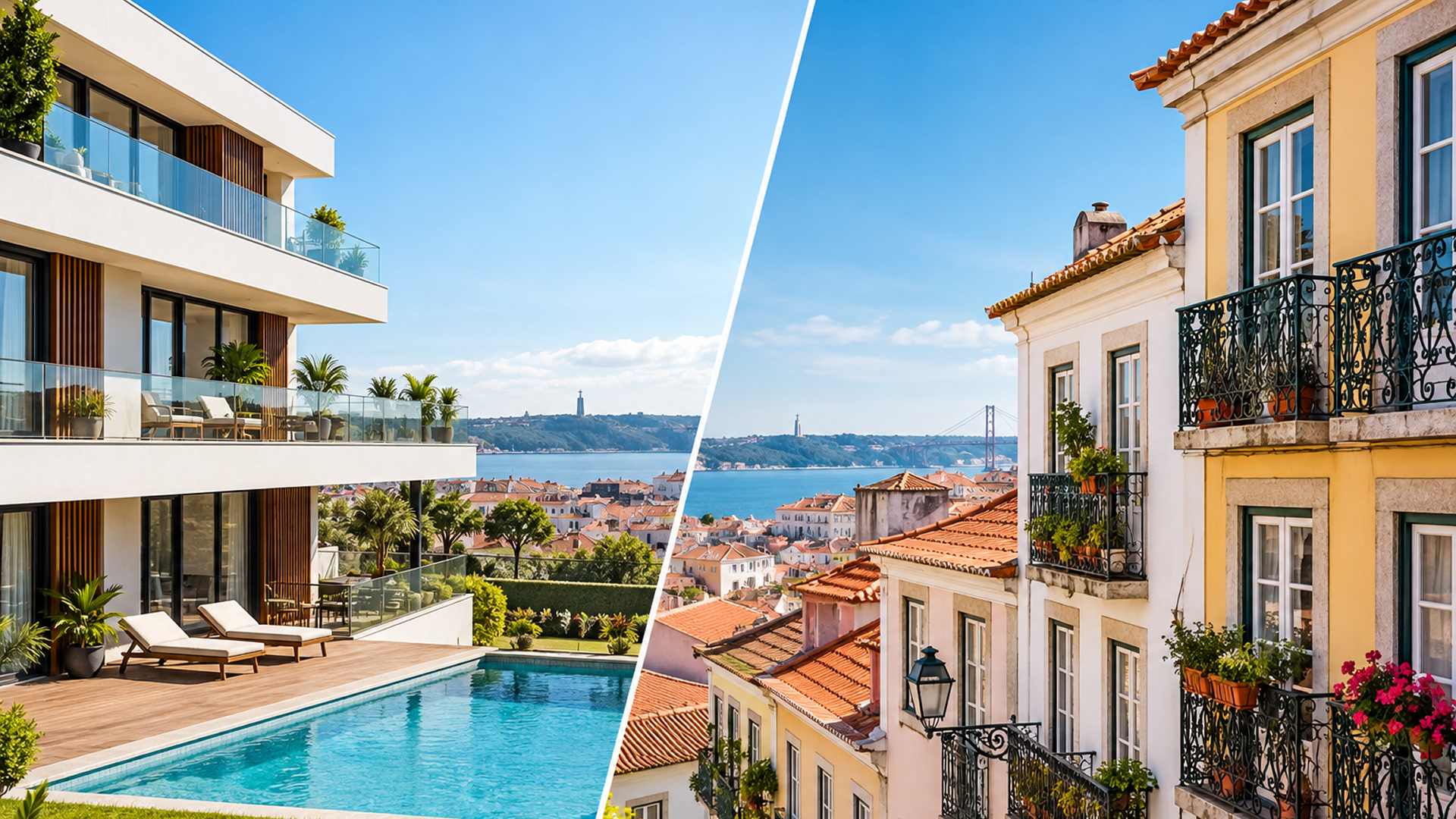
Detached houses and villas are far more characteristic of Comporta than dense apartment developments. Local architecture ranges from simple traditional buildings to renovated homes and contemporary villas.
Three types appear frequently:
- Traditional houses — smaller homes influenced by Alentejo architecture, often with simple volumes, light façades and restrained detailing.
- Renovated properties — older buildings adapted to modern standards while retaining elements of local design.
- Contemporary villas — larger homes with terraces, pools, gardens and a strong connection between indoor and outdoor spaces.
Many newer projects use low building profiles, timber, pale finishes and natural textures. The aim is often to integrate the house into the landscape rather than create a visually dominant structure.
Buyers exploring Portugal real estate should look beyond the design of the house itself. Road access, internet quality, exposure to sun and wind, landscaping and the amount of maintenance required can substantially change the experience of owning a property here.
Larger plots may involve regular garden maintenance, irrigation, pool care, cleaning of outdoor surfaces and upkeep of timber or other materials exposed to sun, moisture and salty coastal air.
Internet deserves a direct check at the exact address when remote work is important. A general assumption about coverage across Comporta is less useful than testing the connection where it will actually be used.
Everyday Services and Transport in Comporta
Comporta has cafés, restaurants, small shops and local services, but the range is naturally limited by the size of the village.
Basic errands can remain local. A wider supermarket choice, specialist shopping, some professional services and more complex appointments may require a drive.
This makes car ownership highly practical. Walking works well within the village, and cycling is useful for recreation and selected short journeys, but neither can cover every part of a household’s weekly routine.
Public transport is much more limited than in Lisbon or Porto, and there is no railway station around which everyday travel can be organised. The importance of this depends heavily on the household: someone working from home will experience Comporta differently from a family making regular school and appointment journeys.
Distance therefore becomes part of planning. A home can be peaceful and beautifully located while still adding considerable travel to an otherwise simple week.
Food and Local Cuisine in Comporta
Comporta’s cuisine reflects its position between agricultural Alentejo and the Atlantic coast.
Rice is central to that identity. The surrounding fields remain productive agricultural land, and rice appears naturally alongside fish and shellfish in local dishes.
One characteristic example is arroz de lingueirão, rice prepared with razor clams, garlic and coriander. Migas represents the traditional Alentejo side of the menu, while fresh fish and seafood connect local cooking with the coast.
Comporta’s growing popularity has also brought a broader restaurant scene. Simple regional cooking now sits alongside contemporary restaurants, beach venues and more internationally influenced menus.
The most interesting part is the connection between food and place. Rice is visible in the fields before it appears on the plate; fish and seafood come from a coastline that shapes the entire area. Local cuisine therefore feels closely tied to the landscape rather than existing as a separate attraction.
Things to Do in Comporta
Outdoor activities dominate leisure in Comporta, with the Atlantic coast and surrounding countryside offering several different options throughout the year.
Popular activities include:
- surfing when Atlantic conditions are suitable;
- swimming during the warmer months;
- cycling along flatter rural roads and tracks;
- horse riding through fields, pine forests and coastal areas;
- birdwatching around wetlands and the wider Sado environment;
- walking along beaches, rural paths and woodland routes.
The surrounding landscape changes enough to keep these activities varied. Agricultural cycles alter the appearance of the rice fields, bird migration brings different species to the wetlands, and the coast feels very different between the busy summer period and quieter months.
Restaurants, shops and seasonal social venues add other options, although Comporta does not offer the concentration of cinemas, theatres, shopping centres or nightlife found in a large city. People who enjoy spending much of their free time outdoors are likely to find the area considerably more varied than its small size initially suggests.
Healthcare and Education in Comporta
Healthcare and education are two areas where location requires careful planning.
Medical facilities in the immediate area are limited. Straightforward needs may be handled locally or nearby, while specialist consultations and more extensive treatment can involve longer journeys.
Schooling creates a similar logistical question. The local choice is narrower than in a major town, and families seeking a particular curriculum or international education need to consider transport before choosing a property.
The important factor is frequency. A longer journey made occasionally is very different from a route repeated twice every weekday. The same applies to regular medical appointments.
Properties around Comporta can be spread across a wide area, so distances that appear modest on a map may still shape the household schedule. Testing these routes in real conditions gives a clearer picture than looking only at kilometre figures.
Summer and Off-Season in Comporta
The difference between summer and the rest of the year is one of Comporta’s most noticeable characteristics.
| Aspect | Summer | Off-Season |
|---|---|---|
| Beaches and roads | More visitors and traffic | Considerably quieter |
| Restaurants and services | Widest seasonal activity | Some businesses reduce hours or activity |
| Social atmosphere | More visitors and international activity | Smaller and more locally focused |
| Daily rhythm | Busier throughout the day | Slower and less crowded |
Summer brings the version of Comporta most people know: fuller beaches, busy restaurant terraces and more movement on local roads.
Once the peak period ends, the same landscape feels more spacious. Beaches become quieter, traffic falls and the permanent population is much more visible.
The change also affects commercial life. Some businesses adjust their opening patterns, and the range of spontaneous options can narrow outside the busiest months.
Neither rhythm defines Comporta on its own. Anyone planning to live here permanently will experience both, which is why time spent in the area during autumn or winter can be particularly informative before making a long-term decision.
Conclusion
Comporta does not need to offer the same conveniences as a city to justify living there. Its appeal comes from a different set of priorities: open space, proximity to the Atlantic, a low-density setting and everyday contact with a distinctive coastal landscape.
That lifestyle will feel natural to some people and unnecessarily restrictive to others.
The most revealing test is not a perfect summer weekend. It is an ordinary week outside the holiday season, when the beach is quiet, familiar places replace endless choice and the practical rhythm of Comporta becomes much easier to see.