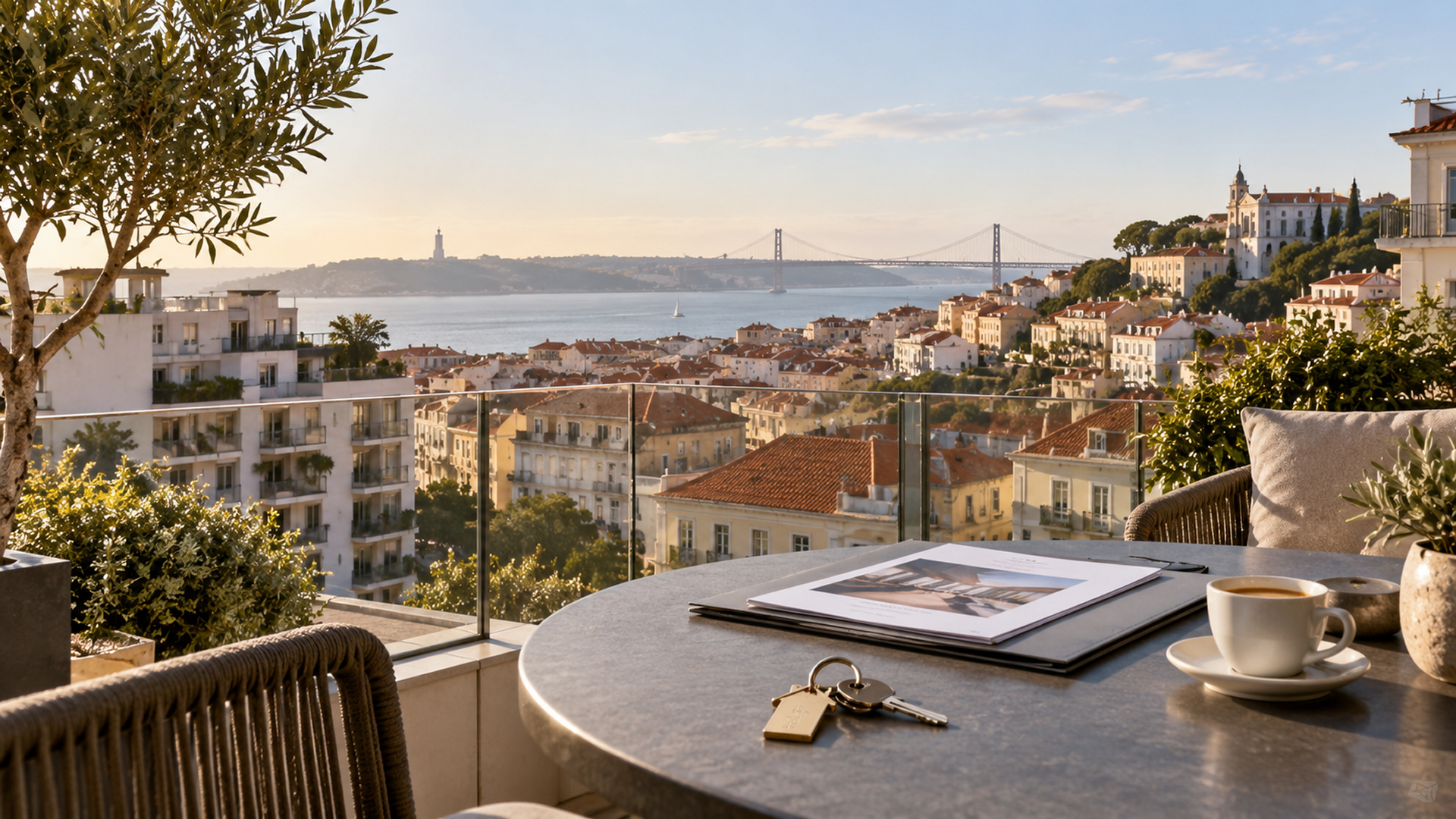
Living in Lisbon means experiencing the Portuguese capital beyond its viewpoints, tiled façades, historic trams, and riverside terraces. Permanent residents also deal with steep streets, tourist activity, older buildings, uneven transport coverage, and significant differences between neighbourhoods.
The city can suit people who value walkable districts, outdoor life, cultural activity, international connections, and access to the wider Lisbon region. It may be less convenient for those who require consistently modern housing, level streets, easy parking, or a consistently quiet environment near the centre.
A successful move depends less on choosing the most famous neighbourhood and more on finding an area that supports an ordinary weekday. Housing quality, terrain, transport, noise, and local services can change considerably within a short distance.
What Is Everyday Life in Lisbon Like?
Lisbon is geographically compact, but moving around it is not always effortless. A destination that appears close on a map may involve a steep climb, a long staircase, or polished calçada portuguesa paving that becomes slippery in wet weather. Walking is part of daily life for many residents, but the terrain should not be underestimated.
The character of the city also changes from street to street. Baixa, Chiado, Alfama, Bairro Alto, and Cais do Sodré provide immediate access to restaurants, cultural venues, historic architecture, and nightlife. These advantages come with visitor traffic, late-night activity, short-term accommodation, and delivery vehicles navigating narrow streets.
More residential areas develop around supermarkets, bakeries, markets, pharmacies, schools, parks, and neighbourhood cafés. A person can gradually become familiar with local shopkeepers and neighbours, giving parts of Lisbon the rhythm of a much smaller town.
The Tagus is central to Lisbon’s landscape, but the city is located beside a river rather than directly on an ocean beach. Reaching the Atlantic coast requires a train, bus, car, or other connection to places such as the Cascais coastline or Costa da Caparica. This is easy enough for occasional trips but should not be confused with living within walking distance of the beach.
Lisbon’s light and mild weather encourage outdoor routines for much of the year. Summer sun can make exposed apartments uncomfortably warm, while winter rain, wind, and humidity reveal weaknesses in insulation, heating, windows, and ventilation. The weather outside may feel pleasant even when an interior remains cold or damp.
Choosing the Right Area of Lisbon
There is no single best neighbourhood for every foreign resident. The most suitable area depends on daily destinations, preferred building type, tolerance for noise, transport needs, and the amount of tourist activity nearby.
| Area | Everyday character | Points to consider |
|---|---|---|
| Baixa, Chiado, Alfama, and Bairro Alto | Historic, central, lively, and heavily visited | Night-time noise, stairs, limited parking, crowds, and building access |
| Campo de Ourique and Estrela | Residential, established, and community-oriented | Hills, bus dependence in some streets, and parking |
| Avenidas Novas and Alvalade | Wider avenues, local services, offices, and established housing | Road traffic, aircraft noise in some locations, and the exact transport connection |
| Alcântara and Belém | Riverside areas combining housing, culture, and commercial activity | Railways, busy roads, tourism, construction, and daily connections |
| Parque das Nações | Modern buildings, flatter streets, waterfront paths, and major transport links | Wind exposure, the condition of shared facilities, and distance from historic Lisbon |
| Outer residential districts | Less tourist-oriented and more closely connected to local routines | Frequency of transport and access to evening services |
| Surrounding municipalities | Different residential environments with connections to the capital | Commuting time, transfers, municipal boundaries, and last services home |
A central address is not automatically the most convenient. Someone working near Oriente may find Parque das Nações or an eastern district more practical than the historic centre. A family with a school outside Lisbon may benefit from living near the relevant railway or road connection. A remote worker may prioritise a quiet street, natural light, and dependable internet over proximity to tourist attractions.
Neighbourhood names can also cover areas with very different conditions. One side of a district may be close to a station and local shops, while another involves steep streets or several transport changes. The route from the front door matters more than the reputation of the postcode.
Lisbon and the Lisbon Metropolitan Area should not be treated as the same administrative territory. Amadora, Odivelas, Oeiras, Cascais, Loures, Almada, and other municipalities can provide practical access to the capital, but each creates a different daily routine. A short train journey may still be followed by a long walk or bus connection.
Finding a Home in Lisbon
Lisbon’s housing includes renovated historic apartments, mid-century residential buildings, converted properties, and modern developments. The quality of two homes on the same street can differ substantially.
Traditional buildings may offer high ceilings, decorative details, and attractive façades but lack lifts, efficient glazing, insulation, or fixed heating. A renovated kitchen or freshly painted wall does not confirm that the plumbing, electrical system, roof, windows, ventilation, or sound insulation have been improved.
The orientation and position of an apartment influence comfort. An upper floor with open exposure may receive intense summer sun. A shaded ground-floor home can be cooler but more vulnerable to humidity. A rear-facing apartment may avoid road noise while receiving less natural light.
A viewing should cover more than room size and appearance:
- Open and close all windows, shutters, and balcony doors.
- Look for condensation, stains, mould, or recently repainted patches.
- Listen for neighbours, traffic, aircraft, nightlife, and building equipment.
- Test the water pressure and hot-water system.
- Establish how the property is heated, cooled, and ventilated.
- Inspect the entrance, stairs, lift, roof condition, drainage, and common areas.
- Confirm mobile reception and fixed-internet availability.
- Clarify whether parking, storage, furniture, and appliances are included.
Visiting at different times can reveal conditions that are absent during a daytime viewing. A quiet morning street may become busy at night, while an attractive evening apartment may receive little daylight. A visit after rain can expose draughts, dampness, drainage problems, or slippery access.
A written rental agreement should clearly identify the property and parties and state its duration, renewal conditions, repair responsibilities, and termination procedure. An inventory supported by photographs provides a record of the home’s condition at the beginning of the tenancy. The property should also be suitable for the correspondence and registrations the resident intends to use.
Foreign residents looking for a permanent home in the capital can explore real estate in Portugal, including properties in Lisbon and its surrounding municipalities.
Apartment buyers should consider the entire building as well as the private unit. Entrances, façades, roofs, lifts, drainage, and other shared elements affect long-term comfort. The condition of common areas can indicate how consistently the building is managed and maintained.
Getting Around Lisbon
Lisbon combines metro, buses, trams, funiculars, suburban trains, ferries, taxis, ride-hailing services, shared bicycles, and scooters. This variety allows many residents to live without using a car every day, although convenience differs sharply by neighbourhood.
The metro works well for many central and northern routes but does not serve every residential area. Buses provide essential connections where stations are absent. Historic trams remain part of the public transport network, but routes passing major attractions can become crowded with visitors.
Urban trains connect Lisbon with Sintra, Cascais, Oeiras, Amadora, Vila Franca de Xira, Setúbal, and other parts of the metropolitan area. Ferries cross the Tagus to communities on the south bank. These connections expand the possible residential area considerably, especially for people whose daily destination is close to a station or ferry terminal.
The Navegante system integrates transport across the metropolitan area. A route may still involve more than one operator, so the complete journey should be considered: the walk to the stop, waiting time, transfers, and the final distance to the destination.
Walking can be the fastest option for short central journeys, but hills and paving affect accessibility. Parents with pushchairs, people with limited mobility, and residents carrying shopping may experience the same route very differently from an unencumbered visitor.
Cycling is more comfortable along flatter riverside and modern districts than on some historic hills. Lisbon has the GIRA bicycle-sharing service as well as private shared-mobility operators, but vehicle availability and cycling infrastructure vary across the city.
A car can be useful for destinations outside the main public transport corridors. Within Lisbon, narrow streets, controlled parking, resident zones, and limited spaces may make it inconvenient. Parking arrangements should therefore be considered together with the property rather than after moving.
Daily Services and Practical Convenience
A neighbourhood’s everyday usefulness depends on the services within a realistic walking or transport radius. A district may have an appealing atmosphere but require inconvenient journeys for groceries, healthcare, school, or other regular needs.
Historic streets often have bakeries, cafés, pharmacies, small supermarkets, and independent shops nearby. They may be less suitable for large deliveries, moving vehicles, or residents who depend on step-free access. Modern districts tend to provide broader roads, newer buildings, and larger commercial facilities but may feel less compact on foot.
Healthcare should be considered geographically. The nearest public health centre, private clinic, pharmacy, hospital, and emergency route may not be located in the same part of the city. The practical experience depends on where the resident lives and which services are available locally.
Families should examine the actual journey to school rather than relying on a district’s reputation as family-friendly. A school described as being in the Lisbon area may be situated in another municipality, turning a seemingly short distance into a daily railway or road journey.
Remote workers need reliable connectivity inside the property. Thick walls, internal rooms, surrounding buildings, and the apartment’s position can affect mobile reception. Fixed-internet availability should be confirmed for the building itself.
Airport noise is another highly local issue. Lisbon Airport is close to developed parts of the city, and aircraft can be noticeable in some neighbourhoods. Experience varies by street, building, glazing, flight path, and time of day, making an in-person visit more informative than a general noise map.
Tourist activity also affects practical life. Restaurants and convenience businesses may be abundant in central areas, while services aimed at permanent residents can be less prominent. Quieter districts may provide a more stable routine but fewer late-opening options.
Language and Social Life
English is widely used in Lisbon’s tourist areas, international workplaces, universities, coworking spaces, and many customer-facing businesses. It is less dependable when speaking with neighbours, contractors, building managers, local health centres, schools, or municipal services.
European Portuguese helps residents move beyond the international layer of the city. Even limited language skills make it easier to understand building notices, arrange repairs, follow school communications, and develop relationships in the neighbourhood.
Lisbon’s international population provides many opportunities to meet other newcomers through professional events, coworking communities, language exchanges, cultural associations, volunteering, and sports. This can make the first months less isolating.
Deeper integration often develops through repeated contact rather than formal networking. Using the same local shops, attending neighbourhood events, joining a regular class, or speaking with other parents at school creates relationships that are less temporary than those formed solely within expat groups.
Social life differs across the city. Central entertainment districts remain active late into the evening, while residential areas revolve more around markets, parks, local restaurants, schools, and community activities. Choosing between these environments is part of choosing where to live.
What to Check Before Moving to Lisbon
A preliminary stay is most useful when it reproduces the intended routine rather than a holiday itinerary.
- Stay in the intended neighbourhood. Accommodation in another part of the city will not reveal the local terrain, noise, services, or journey times.
- Travel at the hours that will matter. Morning and evening conditions can change the experience of public transport and road travel.
- Walk the surrounding streets. Gradients, stairs, paving, lighting, and crossings may affect daily comfort.
- Return at different times. Daytime construction, evening restaurants, aircraft, traffic, and nightlife create different sound patterns.
- Experience less favourable weather. Rain, wind, heat, and limited daylight reveal more about a home than a viewing on a mild afternoon.
- Rehearse an ordinary weekday. Visit a supermarket, test the internet, check delivery access, and travel to essential destinations.
- Compare the city with nearby municipalities. A location outside Lisbon may provide the preferred housing environment without sacrificing access to the capital.
- Choose for daily life, not recognition. A famous neighbourhood is not necessarily the most comfortable place for permanent residence.
Lisbon can provide a compelling combination of historic surroundings, cultural activity, neighbourhood life, international connections, and access to the wider metropolitan region. It works best for residents who are comfortable adapting their routine to the city’s terrain, housing stock, and transport patterns.
The strongest relocation decisions are based on the reality of a particular home and neighbourhood. Experiencing that environment as a resident, even briefly, provides a more reliable guide than the general image of Lisbon as a destination.
This article provides general information and does not constitute legal, immigration, financial, medical, or real estate advice. Individual requirements depend on personal circumstances and the location of the property.