Porto combines the scale and infrastructure of a major Portuguese city with a rhythm that still feels manageable. The historic centre, residential districts, university areas and Atlantic neighbourhoods are close enough to belong to the same city, yet different enough to offer distinct ways of living.
For expats, the main questions are practical: which neighbourhood suits a particular lifestyle, what Porto’s wetter Atlantic climate feels like throughout the year, whether a car is necessary, what to expect from older housing, and how easy it is to access healthcare, schools, food, culture and everyday services.
Porto can work equally well for professionals, students, families and people looking for a more urban alternative to Portugal’s resort areas. But the experience depends heavily on choosing the right part of the city and understanding how Porto functions beyond its historic centre.
Is Porto a Good Place to Live?
Porto suits people who want an active city without the scale of a large European capital. Work, study, restaurants, culture and social life are spread across several districts rather than concentrated in one small centre.
The city also has a strong neighbourhood culture. Residents often build routines around familiar cafés, bakeries, markets and local businesses, while larger commercial and professional services remain easy to reach.
Another advantage is variety. Someone looking for a central urban setting can choose Cedofeita or Bonfim, while Foz do Douro offers a more residential environment near the ocean. Boavista is more business-oriented, and Paranhos is closely connected with universities and healthcare.
Porto is therefore not tied to one particular lifestyle. Its compact size allows residents to combine different parts of the city without feeling that every journey requires crossing a huge metropolitan area.
Climate in Porto
Porto has a mild Atlantic climate, with warm summers, cooler winters and more rainfall than southern Portugal. Summer temperatures are generally comfortable, while autumn, winter and early spring can bring extended periods of rain and cloudy weather.
The Atlantic keeps the air fresher, particularly in areas closer to Foz do Douro and the coast. Even during summer, evenings near the ocean can feel cooler than newcomers expect.
Winter is the season that most changes the impression of the city. Rain darkens the granite façades and stone streets, cafés become busier, and residents spend more time indoors. For anyone planning to stay year-round, this makes the quality of the home especially important.
The climate is not severe, but Porto does not offer permanent sunshine. People arriving with that expectation may be surprised by how seasonal the city feels.
Best Neighbourhoods to Live in Porto
The best area depends less on prestige and more on how you expect to spend a normal week.
| Neighbourhood | Character | Best For |
|---|---|---|
| Foz do Douro | Coastal, residential and quieter | Families and people who want the Atlantic nearby |
| Boavista | Modern, practical and well connected | Professionals and families |
| Cedofeita | Central, lively and walkable | People who want cafés, shops and culture nearby |
| Bonfim | Residential but close to the centre | Those who want urban life with less tourist activity |
| Paranhos | University and healthcare district | Students, academics and professionals |
| Ribeira | Historic, atmospheric and busy | Those who prioritise centrality and historic surroundings |
Foz do Douro
Foz do Douro occupies the western part of Porto, where the Douro reaches the Atlantic. The seafront, beaches and long promenade make the ocean part of the local routine rather than something reserved for weekends. Parque da Cidade is also nearby, adding one of Porto’s largest green spaces to this part of the city.
Buildings range from traditional houses to larger apartment blocks and newer residential properties. The area is farther from the historic centre than Cedofeita or Bonfim, so checking the actual journey to work or school is particularly useful before choosing a home.
Boavista
Boavista developed around one of Porto’s main avenues and has a noticeably different urban landscape from the historic centre. Larger apartment buildings, offices, hotels and cultural institutions are more common here, and Casa da Música is one of the area’s best-known landmarks.
The district covers a fairly large territory, so two addresses described as being in Boavista may have quite different surroundings. Proximity to metro stations and major roads can therefore matter more than the neighbourhood name itself.
Cedofeita and Bonfim
Cedofeita lies immediately north of Porto’s historic core. Rua de Cedofeita and the surrounding streets contain independent shops, galleries, restaurants and smaller businesses alongside residential buildings.
Bonfim extends east of the centre and has undergone considerable change in recent years. Traditional buildings now sit alongside renovated properties, new cafés and creative businesses. Some streets are very close to major central attractions, while others feel distinctly removed from visitor routes.
For anyone considering either area, street-by-street differences are worth checking carefully, particularly when it comes to evening noise and the amount of short-term accommodation nearby.
Paranhos
Paranhos is closely connected with the University of Porto campus and some of the city’s major healthcare institutions. This brings a large student population and creates steady demand for shops, cafés and services throughout the academic year.
The district is extensive and includes both dense urban streets and more conventional residential areas. Metro connections are especially relevant here because many residents commute towards central Porto rather than relying on walking alone.
Ribeira
Ribeira is part of Porto’s historic centre and sits directly beside the Douro. Narrow streets, old buildings and the riverfront create one of the city’s most recognisable environments.
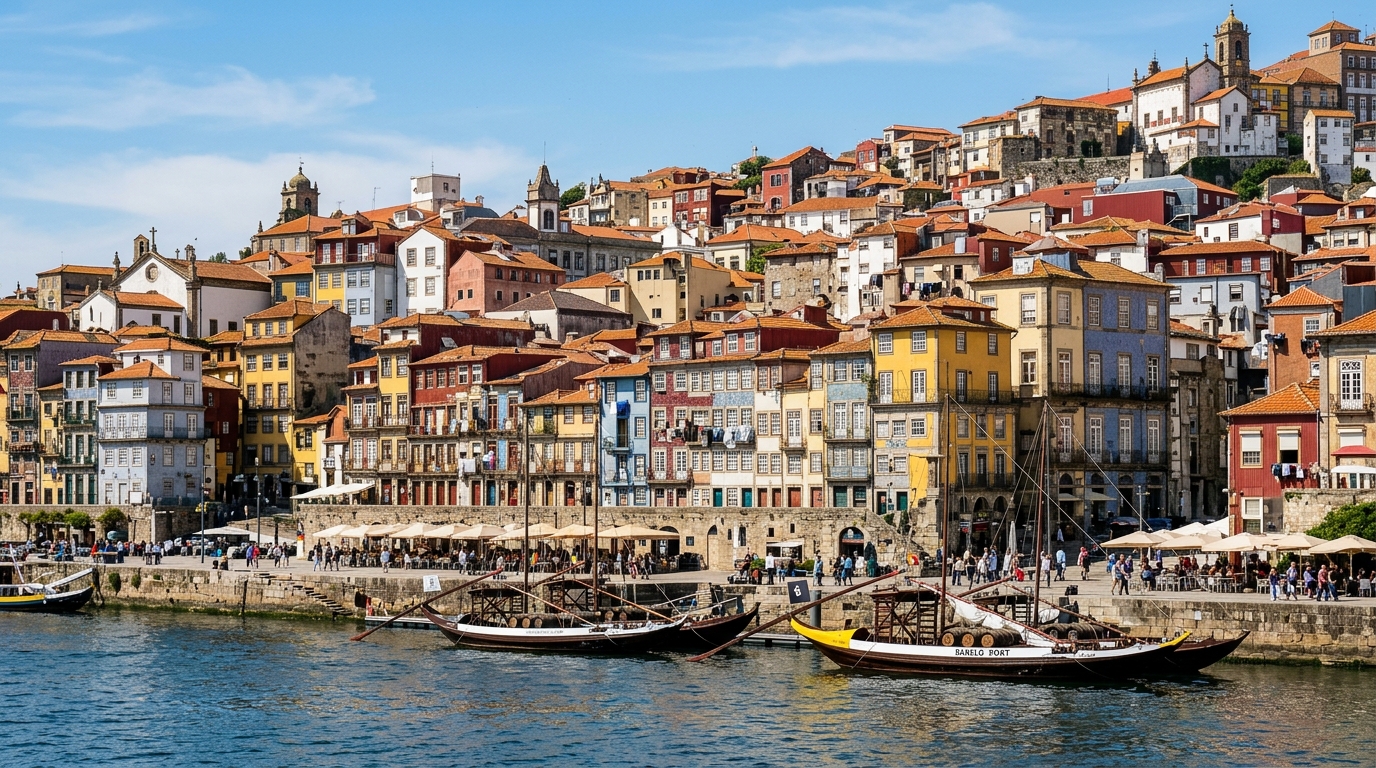
Living here also means dealing with characteristics that visitors may notice less: pedestrian traffic, restaurants operating into the evening, limited vehicle access on some streets and historic buildings that can lack lifts or other modern conveniences.
For a permanent resident, the exact street and building can therefore matter considerably more than simply having a Ribeira address.
Housing and Property in Porto
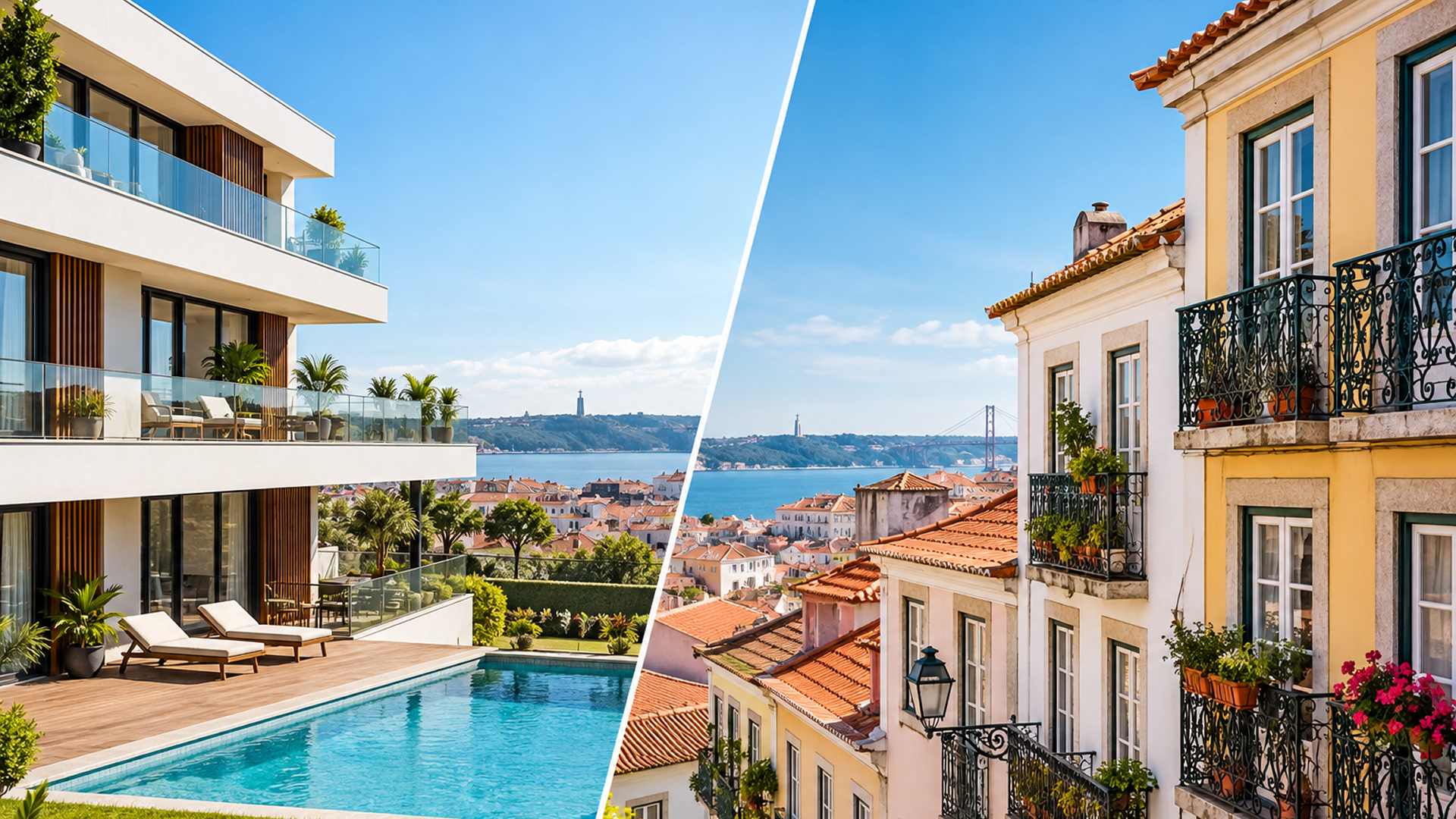
Porto’s housing stock ranges from narrow historic buildings to twentieth-century apartment blocks and new residential developments.
Older properties can be especially attractive because of their high ceilings, balconies, wooden floors and traditional façades. Renovation quality, however, varies significantly. A beautiful exterior does not necessarily mean that the interior has modern insulation, ventilation or building systems.
Newer properties often offer features that are harder to find in the historic centre, including lifts, parking, larger windows and more contemporary layouts.
For buyers exploring Portugal real estate, Porto offers very different property types within a relatively compact area. Choosing between them is often less about architectural style and more about how the home will function throughout the year.
When viewing a property, check:
- natural light and window orientation;
- signs of dampness or moisture;
- ventilation and insulation;
- heating and window quality;
- sound insulation and street noise;
- lift access in multi-storey buildings;
- parking if a car will be used regularly.
A property that looks impressive during a short viewing should still be evaluated as a place for daily use in both summer and winter.
Public Transport in Porto
Porto has metro, buses, urban trains and some historic tram services. The Andante system covers much of the public transport network, making it possible to combine different modes of travel.
The metro is particularly important for residents. It connects central districts with other parts of the metropolitan area, and Line E links the airport with the city.
For people living and working near good transport connections, owning a car is not essential. Central Porto is also highly walkable, although its hills can make some routes more demanding than their distance suggests.
A car becomes more useful for households whose regular journeys extend beyond the city or involve locations that are not well connected by public transport. In central districts, parking and narrow streets can make driving less convenient.
Food in Porto
Food is one of the clearest expressions of Porto’s local identity.
The city is particularly known for francesinha, a substantial sandwich made with meat, cheese and sauce, and tripas à moda do Porto, a traditional dish closely linked to Porto’s history. Fish, seafood and rice dishes are also common across local menus.
But everyday food culture is broader than a list of famous dishes.
Morning coffee at a neighbourhood café, fresh bread from a local bakery, lunch menus aimed at regular customers and long meals with friends remain part of daily life. Traditional restaurants sit alongside contemporary Portuguese cooking and international cuisines.
Porto also has markets and food halls, but residents often develop strong preferences for places close to home rather than constantly moving between the city’s most talked-about restaurants.
This everyday relationship with food is one reason Porto can feel local even in central areas.
Healthcare in Porto
Porto has a broad healthcare network that includes public hospitals, private hospitals, specialist clinics, health centres and pharmacies.
Major medical institutions are concentrated in several parts of the city, particularly around Paranhos and other northern districts. Private healthcare is also widely available.
For foreign residents, access depends on individual circumstances, including residency status, registration in the Portuguese health system and any private insurance arrangements.
For daily needs, neighbourhood access matters as much as major hospitals. A pharmacy or clinic within easy reach is something residents are likely to use far more often than a large specialist institution.
Schools and Education in Porto
Porto has Portuguese public and private schools as well as several international schools.
Families moving from abroad can consider institutions such as:
- Oporto British School — an established international school in Porto.
- CLIP – Oporto International School — offers an international curriculum based on the National Curriculum for England.
- Lycée Français International de Porto — provides French international education.
- Deutsche Schule zu Porto — offers German-Portuguese bilingual education.
School location can have a major influence on where a family chooses to live. A convenient adult commute does not always translate into an easy daily school run.
Porto is also one of Portugal’s main university centres. The presence of the University of Porto and other higher-education institutions gives several neighbourhoods a younger atmosphere and supports a large population of Portuguese and international students.
Attractions and Things to Do in Porto
Porto’s attractions are not limited to places visited once and checked off a list. Many become part of regular city life.
The historic centre and Ribeira provide the city’s best-known architecture and river views. Serralves combines contemporary art with extensive gardens, while the Palácio de Cristal gardens offer green space close to the centre.
Parque da Cidade is particularly important for residents because it provides a large urban park extending towards the Atlantic. Foz adds beaches and coastal walking routes without requiring a trip outside Porto.
Football is another major part of local culture, with FC Porto and Estádio do Dragão playing a visible role in the city.
Residents can also choose between museums, concerts, markets, exhibitions and neighbourhood events throughout the year. This means leisure does not depend on a single tourist district or season.
Expat Community and Language in Porto
Porto has a visible international population connected with universities, international companies, tourism and foreign residents who have settled in the city.
English is widely useful in international environments and can make the first months easier. It is less reliable once daily life involves local administration, neighbourhood businesses, tradespeople or conversations outside internationally oriented settings.
Portuguese therefore becomes increasingly valuable over time.
Even basic language skills make everyday interactions easier and create more opportunities to connect with local residents. Joining a language course, sports group, professional community or other regular activity can also help newcomers build a social circle beyond the expat community.
Porto is international enough for newcomers to settle in without feeling isolated, but local enough that learning Portuguese noticeably changes the experience.
What to Know Before Moving to Porto
A few checks can make the transition significantly easier:
- Choose a neighbourhood based on routine, not reputation. Think about work, school and the places you will visit regularly.
- Test your main routes before committing to a home. Porto’s hills can make distances feel different from what a map suggests.
- View older properties carefully. Building condition varies widely, even in renovated areas.
- Visit the street at more than one time of day. Noise and activity can change considerably between afternoon and evening.
- Consider winter conditions. A home should remain comfortable during Porto’s wetter months, not only on sunny viewing days.
- Start learning Portuguese early. Fluency is not required, but basic communication makes settling in easier.
These are small practical checks, but they can make the difference between liking Porto as a destination and enjoying it as a place to live.
Conclusion
Porto offers several different versions of Portuguese city life within a relatively compact area. There are historic streets, university districts, modern residential avenues and Atlantic neighbourhoods, each suited to a different routine.
The city has good transport, healthcare, education, food and cultural life, while remaining small enough for residents to develop a strong connection with their own neighbourhood.
The most important decisions are therefore local ones: choosing the right area, understanding the condition of the property and making sure everyday routes work in practice.
For expats who pay attention to those details, Porto can provide a comfortable long-term base with a strong Portuguese identity and enough variety to keep the city interesting long after the first visit.