Portugal’s Silver Coast brings together Atlantic beaches, traditional towns, farmland and historic settlements within one part of central Portugal. Some places face the open ocean, others sit beside bays or lagoons, while larger towns lie a few kilometres from the beach.
This variety gives the coast a character of its own. The landscape can change quickly from waterfront streets and dunes to agricultural land, older villages and conventional residential areas.
Where Is Portugal’s Silver Coast?
The Silver Coast, or Costa de Prata, is a geographical name rather than an official administrative region. It refers broadly to the central-western Atlantic coast of Portugal north of Lisbon.
Long sandy beaches are interrupted by rocky stretches, dunes and lagoons. Behind the shoreline are pine-covered areas, farmland, villages and towns of very different sizes. Unlike a continuous urban coastline, development is broken up by open land.
There is no single city that acts as the centre of the entire Silver Coast. Different towns provide different combinations of housing, shops, healthcare, schools and access to the ocean.
Where to Live on Portugal’s Silver Coast
Several places are regularly considered for permanent living, each with a distinct scale and geography.
| Place | Location | Main Character |
|---|---|---|
| Nazaré | Atlantic coast | Established seaside town with an active centre and residential areas above the coast |
| Peniche | Peninsula | Maritime town shaped by fishing, beaches and surf culture |
| São Martinho do Porto | Bay | Smaller waterfront town around a naturally sheltered bay |
| Foz do Arelho | Coast and lagoon | Lower-density residential area close to the Atlantic and Óbidos Lagoon |
| Caldas da Rainha | Inland | Larger town with a broader range of shops, healthcare and public services |
| Óbidos | Inland | Small historic town centred on a preserved medieval core |
A walkable seaside town, a lower-density coastal area and an inland urban centre create very different routines. The choice depends on whether beach access, nearby services, privacy, a larger property or a compact town centre matters most.
Climate on the Silver Coast
The Atlantic has a strong influence on local weather. Summers are warm and predominantly dry, although sea breezes can make exposed coastal areas feel fresher than inland parts of Portugal.
Rain becomes more frequent during autumn. Winters remain mild, but they are wetter and windier, while spring brings increasingly comfortable conditions well before the busiest summer months.
Exposure varies even over short distances. A house facing the ocean may experience stronger wind than a property protected by dunes, neighbouring buildings or higher ground. A few kilometres inland, direct maritime exposure decreases while temperatures remain relatively moderate.
The Atlantic stays cool even in summer, so sea conditions are different from those found on warmer Mediterranean coasts.
Property and Homes on the Silver Coast
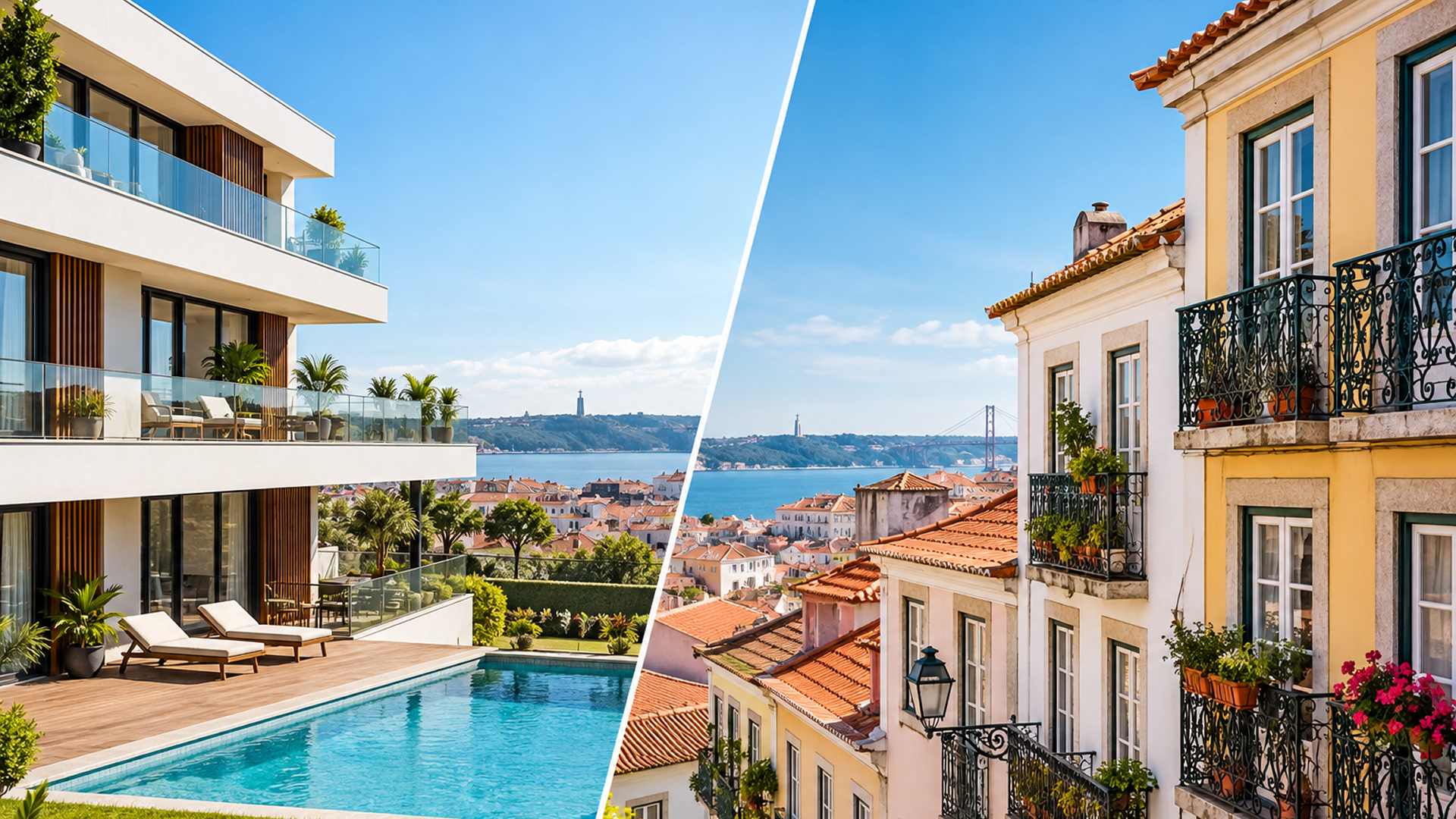
The local housing stock developed over many generations rather than around a single resort model. Older urban homes, apartments, detached houses, contemporary villas and rural properties can all be found within the broader area.
Traditional houses in historic streets often have tiled roofs, masonry walls and narrow façades. Internal layouts may include smaller separate rooms, while renovated properties sometimes retain the original exterior and introduce modern kitchens, bathrooms, heating and insulation.
Apartments are more common in built-up coastal towns and near central waterfront areas. Detached homes appear more frequently toward town edges and in lower-density communities. Contemporary villas often use large windows, terraces and gardens to make greater use of views and outdoor space.
A property viewing should include several checks:
- Ventilation and moisture — older or poorly aired homes can develop condensation and damp.
- Exterior materials — salty air and wind increase wear on paint, metal fittings and exposed timber.
- Roof and drainage — gutters, roofing and water runoff become particularly important during wetter months.
- Orientation — sun exposure and prevailing wind influence the comfort of terraces and gardens.
- Access and parking — narrow historic streets and sloping terrain can limit vehicle access.
Rural homes bring additional considerations such as larger plots, irrigation, boundary maintenance and private access roads.
People exploring Portugal real estate on the Silver Coast can therefore choose between established Portuguese housing, newer construction and homes with a more rural character.
Everyday Services, Healthcare and Schools
The range of services available nearby depends largely on the size of the closest town. Larger centres provide supermarkets, pharmacies, banks, municipal offices and a wider selection of shops and professional services.
Smaller coastal communities still cover many routine needs. Specialised shopping, administrative services and regular professional appointments are more likely to require a trip to a larger centre.
Healthcare follows a similar pattern. Pharmacies and primary care are available in many populated areas, while hospitals, diagnostics and specialist services are concentrated in larger centres.
Families also need to consider education. Public schools serve local municipalities, but private and international options are less widely distributed than around Lisbon or Porto. A specific curriculum can therefore influence which part of the coast is suitable for a household.
Transport on the Silver Coast
A car offers the greatest flexibility, particularly for residents outside established town centres.
The A8 is an important road connection through the southern and central part of the area, linking locations north of Lisbon with the capital and other parts of central Portugal. Local roads provide access between inland towns, smaller communities and the Atlantic coast.
Inside many town centres, short journeys can be made on foot. Cafés, food shops, pharmacies and restaurants may be grouped within a relatively small area, while cycling is practical on selected local routes and flatter stretches of countryside.
Regional bus and rail services cover parts of western Portugal, although accessibility varies significantly by location. Anyone planning to rely on public transport should examine the connections serving the particular town under consideration.
Food and Things to Do on the Silver Coast
The Atlantic naturally shapes recreation. Open beaches attract surfers and bodyboarders, while calmer stretches of water are better suited to swimming, kayaking and paddleboarding.
Other popular activities include:
- walking along beaches, dunes and coastal paths;
- cycling through rural roads and agricultural landscapes;
- visiting local markets;
- exploring historic town centres;
- walking around fishing harbours and smaller coastal communities;
- taking short trips into the countryside.
Fishing traditions remain visible in the local cuisine. Fresh fish and shellfish are common on coastal menus, alongside caldeirada, grilled fish, rice dishes and other Portuguese classics. Inland markets and shops add seasonal fruit and vegetables, bread, cheeses and produce from the surrounding agricultural areas.
Restaurants range from simple neighbourhood establishments to newer dining venues near popular waterfronts. Away from the busiest coastal streets, traditional cafés, bakeries and family-run restaurants remain an important part of local food culture.
The landscape also makes it easy to vary free time. A weekend does not have to revolve around the beach: countryside, markets, historic streets and walking routes provide very different alternatives.
Conclusion
The Silver Coast offers several ways to live near the Atlantic without committing to one type of coastal environment. The differences between individual locations become most important once work, school, shopping and regular appointments enter the picture.
A few ordinary weekdays in a shortlisted town can reveal more than a short sightseeing visit: how easy the regular journeys are, which services are genuinely nearby and whether the pace of the area fits the way you plan to live.