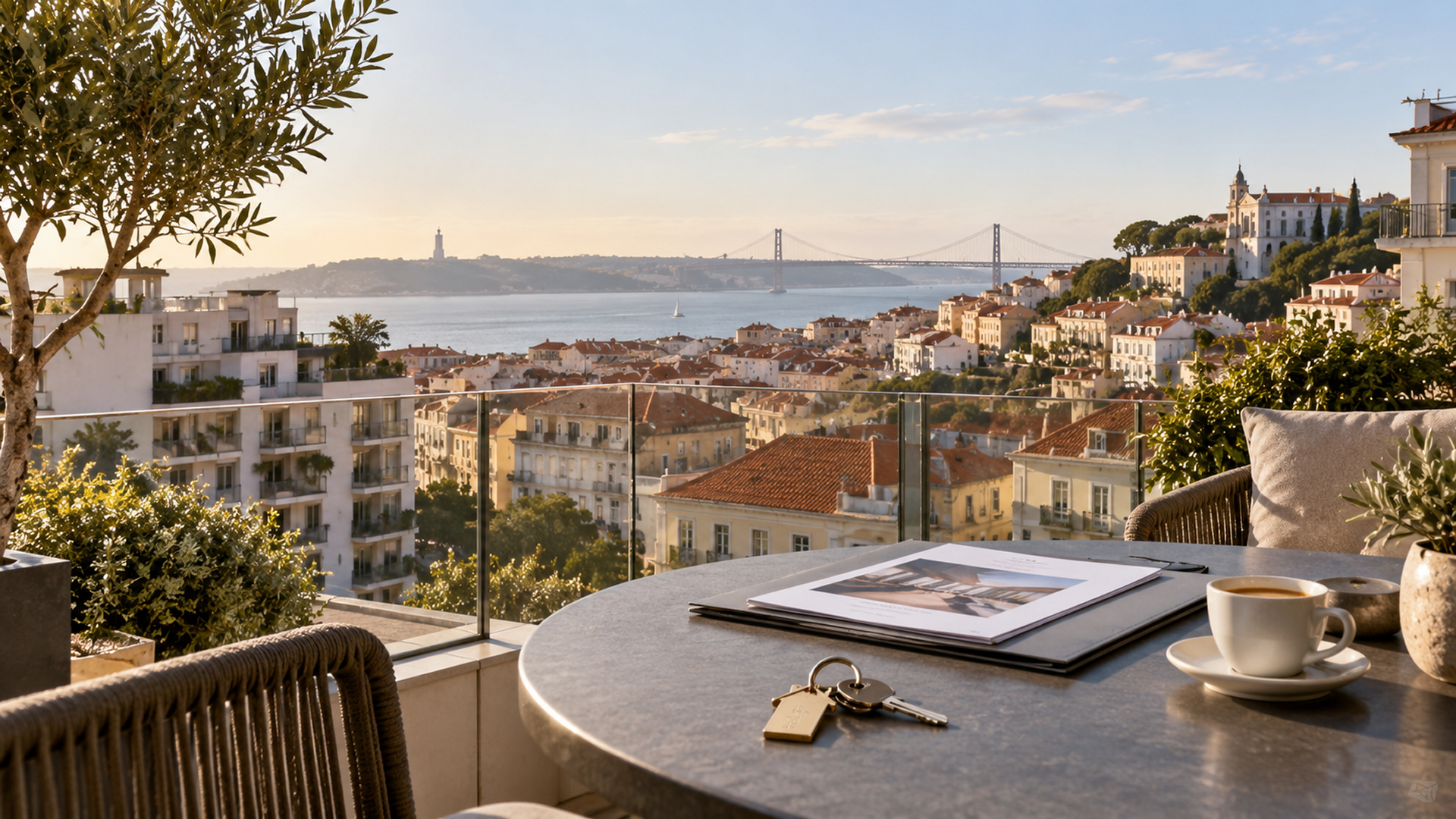
Portugal’s property market uses a mixture of familiar international terms and local classifications that may not be immediately clear to foreign buyers. Understanding these distinctions helps make property listings easier to read, compare different options and search Portugal real estate with a clearer idea of what each description actually means.
Apartments in Portugal
Apartments are one of the most common types of residential property in Portugal, especially in cities, coastal areas and larger residential developments. One of the first details buyers notice in listings is the T classification, which indicates the number of bedrooms.
A T0 is a studio without a separate bedroom. A T1 has one bedroom, a T2 has two, a T3 has three, and the same system continues for larger properties. The number refers to bedrooms rather than the total number of rooms, so a T2 may also include a living room, kitchen, bathrooms, hallways and storage areas.
Listings may also include formats such as T2+1 or T3+1. The additional room after the plus sign is not counted among the main bedrooms. Depending on its size and layout, it may be used as an office, guest room, dressing room or another functional space.
Apartment descriptions can also refer to the internal arrangement of the property. A duplex extends across two levels within the same apartment, while a triplex occupies three. These layouts can create a stronger separation between different living areas compared with a traditional single-level apartment.
A penthouse is located on the upper levels of a building and is often associated with larger terraces, open views or increased privacy. However, the term itself does not define the exact size, layout or features of the property.
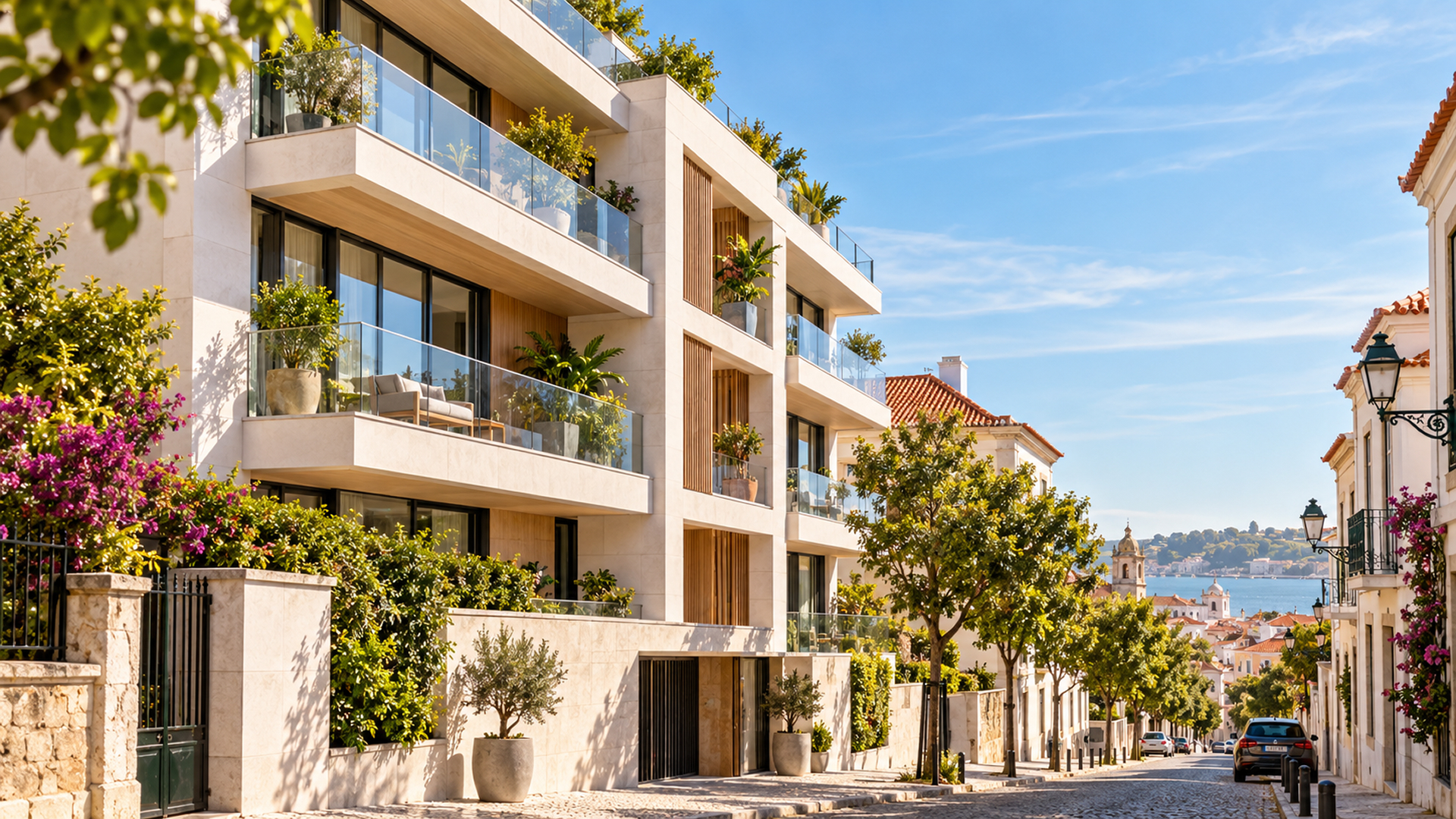
Ground-floor apartments are another category with their own characteristics. Some provide direct access to gardens, patios or terraces, while others are positioned closer to streets or shared areas. The location within the building can therefore influence privacy, natural light and outdoor access.
Houses in Portugal
The Portuguese term moradia is widely used for houses, but it includes several different formats with important structural differences.
A detached house, or moradia isolada, is an independent home without shared walls with neighbouring properties. It may include a private garden, driveway, garage, swimming pool or surrounding land.
A semi-detached house, or moradia geminada, shares one side with another property. The two homes are connected structurally but have separate entrances and independent living spaces.
A terraced house, or moradia em banda, forms part of a row of connected homes. Properties in the middle of the row usually share walls on both sides, while end units share only one wall.
Another important distinction is the number of floors. A single-storey house, or moradia térrea, keeps the main living areas on one level. Other houses may distribute bedrooms, living spaces and service areas across several floors, creating a different internal organisation.
Villas in Portugal
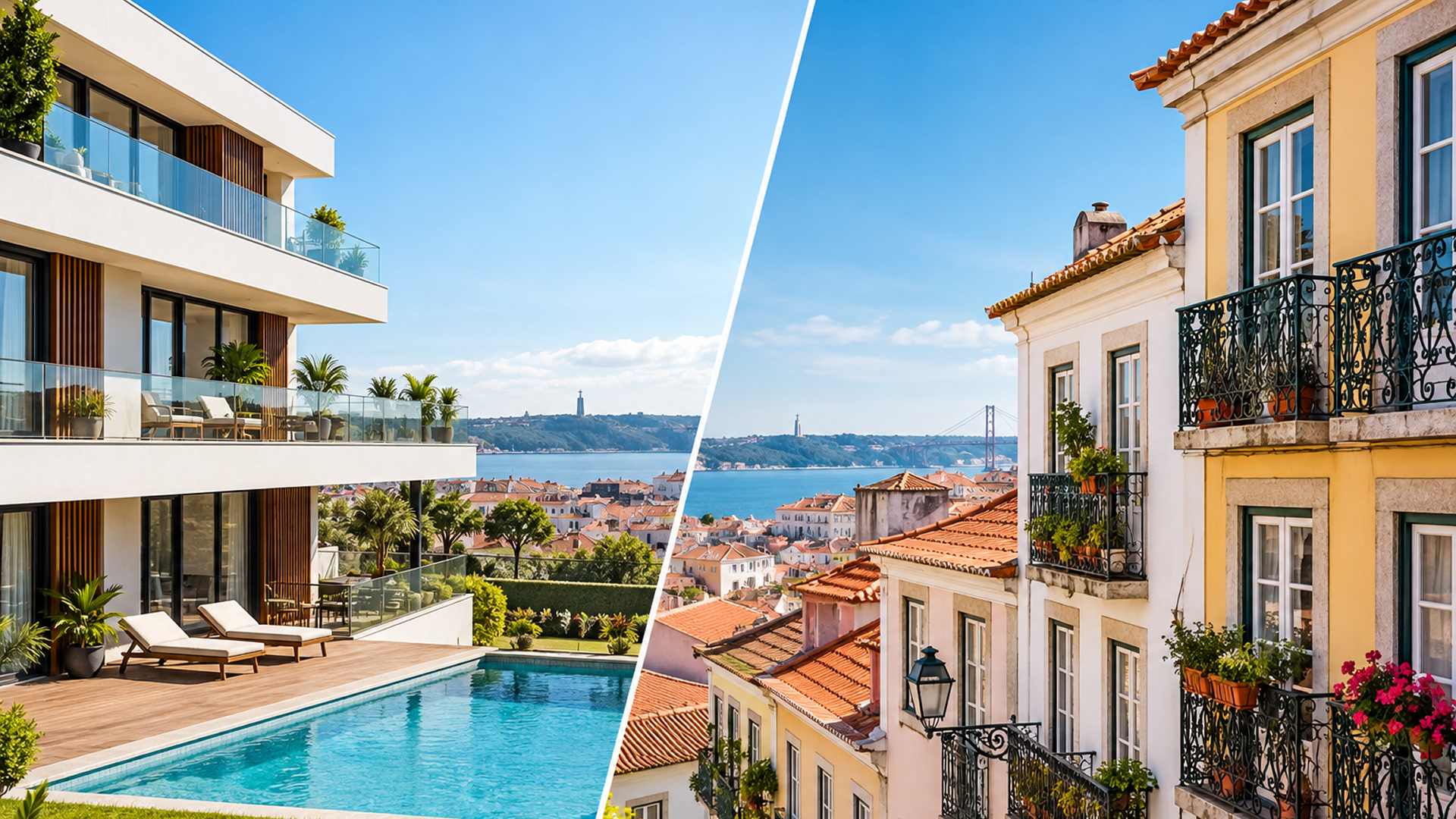
Villa is frequently used in international property listings, especially for homes in coastal areas, resorts and suburban locations. It often describes a private house with outdoor space, a garden, a swimming pool or a larger plot.
However, villa is a broad marketing term rather than a strict property category. In Portuguese terminology, many properties described internationally as villas would simply be considered moradias.
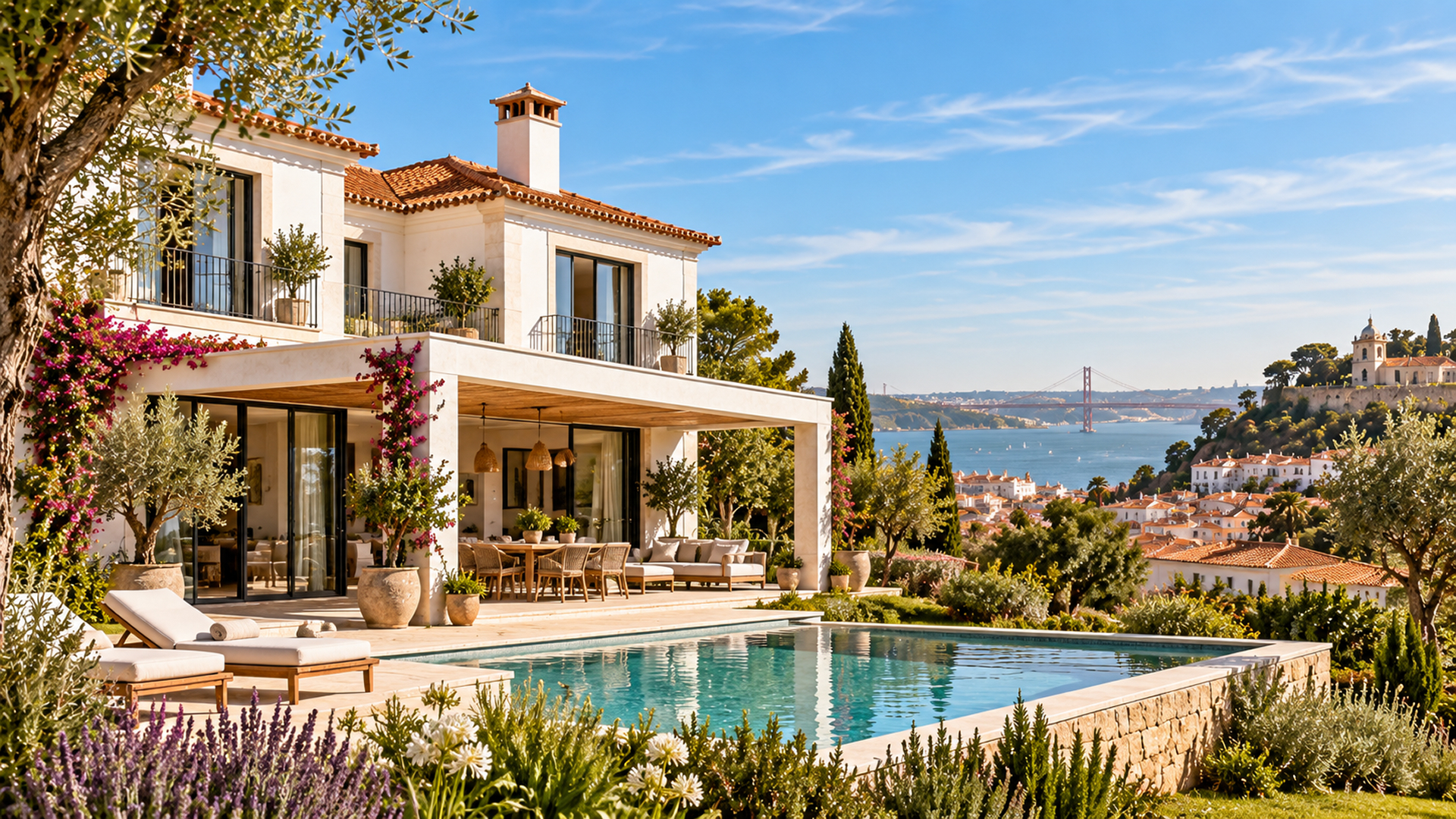
The word alone does not indicate the exact size, construction style or level of privacy. A villa can range from a relatively compact home in a residential area to a large property on extensive land, so the individual characteristics of the building remain more important than the name used in the listing.
Rural Property in Portugal
Rural property in Portugal often combines residential buildings with surrounding land and can differ significantly from urban housing.
A quinta usually refers to a rural property with a house and land. The property may include gardens, orchards, vineyards, olive groves, agricultural areas or open countryside. Some quintas continue to have agricultural uses, while others have been adapted as private residences or tourism properties.
A herdade generally describes a larger rural estate with extensive land. These properties are especially associated with regions such as Alentejo and may include residential buildings, agricultural areas, woodland, livestock facilities and additional structures.
A casa de campo, or country house, is a broader description used for homes located in rural surroundings. It can refer to both modest countryside houses and larger properties with land.
When considering rural property, the relationship between the buildings and the land is particularly important. Access, existing structures, water availability, boundaries and permitted uses can influence the practical value of the property.
Land in Portugal
Land requires a different approach from a finished home because the size and appearance of a plot do not determine what can be built or how it can be used.
Listings may describe land as urban, rural or intended for construction. These terms provide an initial indication, but buyers should also consider planning rules, permitted uses and local restrictions.
A rural plot may be connected with agriculture, forestry or other countryside activities. A building plot may offer development potential, but the possible size, design and purpose of future construction depend on applicable planning regulations.
For buyers interested in building a home or developing a project, the planning status of the land is one of the most important factors to verify before making a decision.
Commercial Property in Portugal
Commercial property covers premises designed for business activities rather than residential use.
This category includes shops, offices, warehouses, restaurants, hotels and other hospitality properties. Their suitability depends on factors such as access, layout, visibility, technical requirements and authorised use.
Portugal also has mixed-use properties, where residential and commercial spaces exist within the same building. For example, shops or offices may occupy lower floors while apartments are located above.
Buyers considering commercial or mixed-use buildings need to evaluate how each part of the property is intended to function and whether it matches their plans.
Property Features
The type of property is only one part of an overall description. Additional features can significantly affect how comfortable and practical a home will be.
Outdoor spaces may include balconies, terraces, patios or gardens. These features provide different levels of privacy and usability, from a small area for outdoor seating to a larger space suitable for everyday activities.
Parking and storage are also important characteristics. A property may include a private garage, allocated parking space, communal parking or a separate storage room.
Residential buildings may offer shared facilities such as elevators, swimming pools, landscaped areas or controlled entrances. These features belong to the wider building or development rather than the private interior of the property.
Other common listing details include sea views, river views, renovated interiors, furnished properties, air conditioning and equipped kitchens. These descriptions help buyers understand the condition and comfort level of a property beyond its basic category.
Which Property Type Is Right for You?
The right property type depends on how the space will be used and what features are important for everyday life. These questions can help narrow the search:
-
Where do you want to live?
Consider whether you prefer a city centre, suburb, coastal area, small town or countryside. -
How much outdoor space do you need?
Decide whether a balcony is enough or whether you want a terrace, garden or larger plot. -
Are shared walls acceptable?
This can help determine whether apartments, terraced houses or detached homes are more suitable. -
How many bedrooms do you need?
This provides a starting point when searching for T1, T2, T3 and larger properties. -
Do you prefer a single-level home?
A ground-floor apartment or single-storey house may be more suitable than a multi-level property. -
Do you need parking or storage space?
These features can be essential depending on the location and lifestyle. -
How much land do you want to maintain?
A private garden and a large rural estate require very different levels of care. -
Will the property have another purpose besides living?
If you plan to work, run a business, farm or use the property for tourism, this should influence the choice.
Property Types Comparison
Different property categories offer different combinations of space, privacy and maintenance requirements.
| Property type | Main characteristics | What to consider |
|---|---|---|
| Apartment | Residential unit within a larger building, often with shared facilities | Floor, building condition, outdoor space and condominium features |
| Detached house | Independent home without shared walls, often with private outdoor areas | Land size, maintenance and access |
| Semi-detached house | Home connected to one neighbouring property | Privacy, shared wall and outdoor space |
| Terraced house | Property forming part of a connected row of homes | Position within the row, privacy and layout |
| Villa | Broad term often used for private houses with outdoor space | Actual property type, land and features |
| Quinta | Rural home or buildings combined with surrounding land | Condition of buildings, land use and access |
| Herdade | Large rural estate with extensive land | Scale, infrastructure and management requirements |
| Country house | Home located in a rural environment | Services, accessibility and surrounding area |
| Building plot | Land intended for future construction | Planning rules and development potential |
| Commercial property | Premises designed for business activities | Permitted use, access and technical requirements |
Conclusion
Choosing property in Portugal is not only about finding a building that looks attractive in a listing. The way a home connects with its surroundings, the amount of space it provides and how easily it fits into daily life often define whether it becomes a suitable long-term choice.
Understanding the differences between property types gives buyers a clearer starting point and helps create a more focused search from the beginning.